The Old Market Hall, 1877-1988
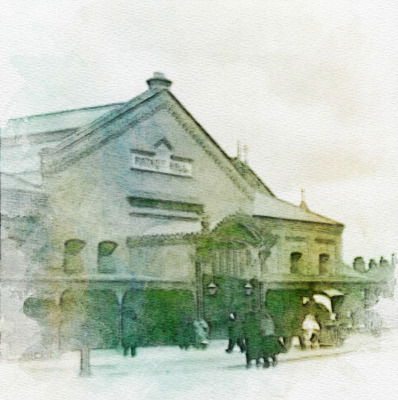
For more than six centuries, Wigan’s markets were held in the open streets. Traders gathered beneath the sky just as they had done since 1247, when a charter granted market rights to the rector of Wigan. Monday and Friday became established market days, and for generations the buying and selling of goods formed the commercial and social heartbeat of the town.
By the Victorian period, rapid industrial growth had transformed Wigan. The old street markets, though traditional, were increasingly seen as overcrowded and unsuited to a modern borough. The answer was ambitious: a vast covered Market Hall that would bring order, shelter, and civic pride to Wigan’s long-standing market trade.
For centuries, market tolls were shared in an unusual arrangement. The rector of Wigan received income from stalls on one market day, while the corporation collected tolls on the other. This continued until 1860, when the corporation purchased the rector’s tolls and manorial rights for £2,800, giving the town full control of market revenues.
The idea of a covered market had been discussed for around forty years before anything concrete happened. A site was finally selected in 1871. In 1874, the corporation resolved to erect a hall and offered premiums for competitive designs.
The building was designed by borough engineer John Law Hunter, whose plans were eventually adopted by the town. The contract for erecting the building was awarded to Mr. C. B. Holmes of Wigan. Contemporary sources differ slightly on the figures, but the building contract was around £13,000, with a further £1,900 for the internal fittings. Altogether, the project cost in the region of £15,000, a substantial municipal investment at the time. The Market Hall was formally opened on 21st May 1877 by the Mayor of Wigan, Walter Mayhew.
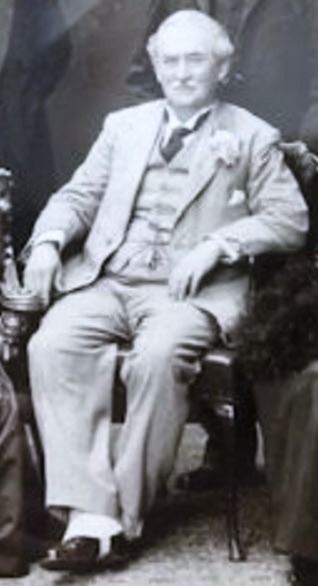
Walter Mayhew
The first Market Superintendent was William Grime. whose family had a music business in the appropriately named Grimes Arcade. William would hold this position until his death in 1892.
The new hall stood in the centre of an open space with good approaches from surrounding streets. Built of red brick with stone dressings, it was both practical and imposing. Reports vary in their measurements, but the hall was approximately 150 feet wide and 26 feet high, and in excess of 200 feet in length. The interior was well lit and ventilated, with large windows and roof lighting, and there were multiple entrances to allow easy access for both traders and the public.
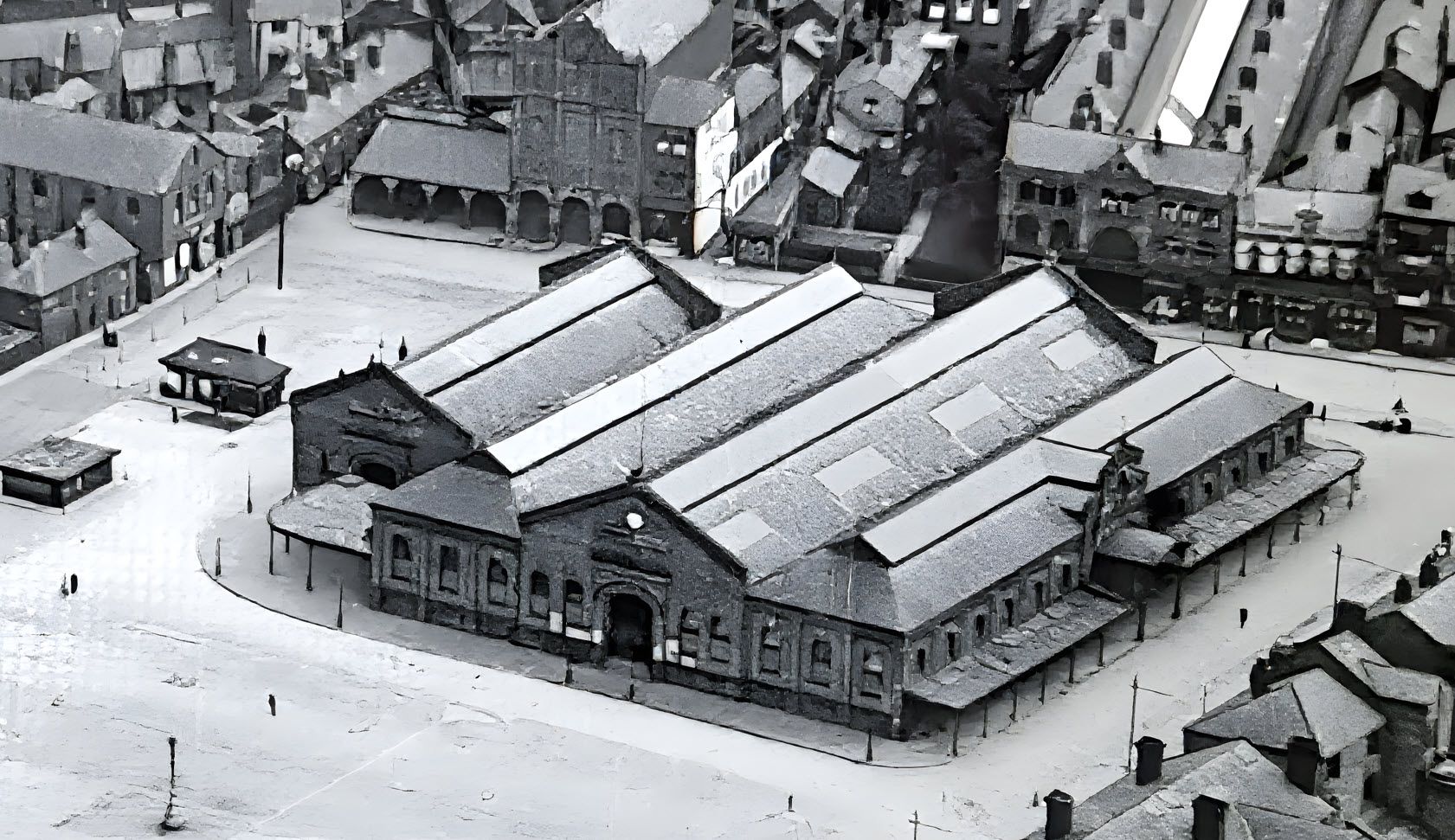
A separate Fish Market adjoined the main hall. This building measured 120 feet by 50 feet and was arranged as a single avenue with stalls on either side, purpose-built for fishmongers and designed with similar attention to height and ventilation.
Inside, the general market provided a remarkable range of trading accommodation. There were 42 enclosed shops, 20 butchers’ stalls, and 20 fruiterers’ stalls, alongside additional stalls and tables for earthenware, hardware, drapery, butter, and other goods. When the stalls and shops were let by public auction, the results were extraordinary. They realised around £93 per week, amounting to nearly £5,000 per year — far beyond expectations and a clear sign of Wigan’s thriving commercial life.
With the new hall in operation, stalls were finally removed from the streets, ending a trading tradition that had lasted more than 600 years. The Market Hall was more than just a building; it was a bold civic statement that Wigan was a modern industrial borough prepared to invest in public infrastructure while preserving its historic role as a market town.
For generations afterwards, it remained a focal point of daily life — full of noise, colour, and conversation — where the town’s medieval trading tradition continued under a Victorian roof.
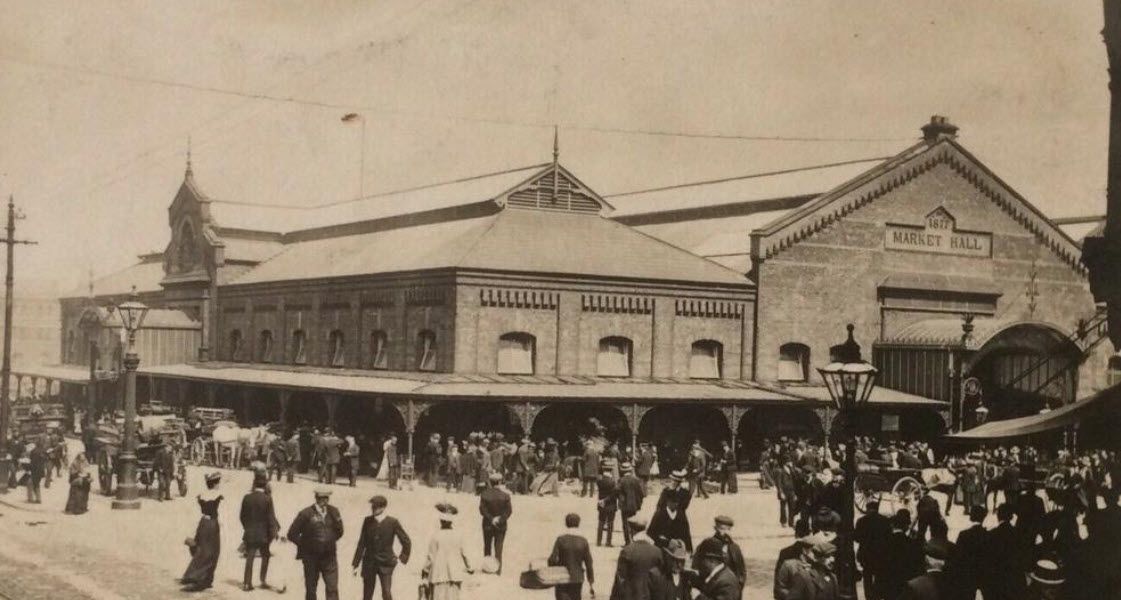
After more than a century at the heart of Wigan’s commercial life, the Market Hall’s story came to an end in 1988, when it was demolished to make way for the development of The Galleries Shopping Centre. Its loss marked the disappearance of one of Victorian Wigan’s most significant public buildings, but its legacy lives on in the long tradition of market trading that continues in the town today.
Source - Wigan Archives, FindmyPast, Mayhew Collection