James Pollitt GC: A Mining Hero Remembered
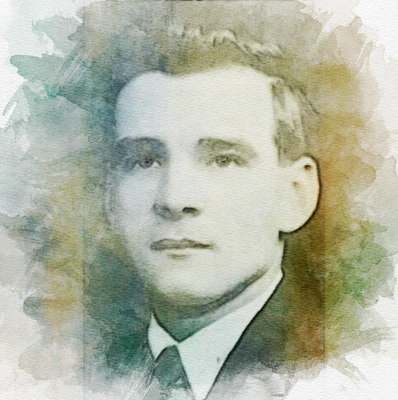
Wigan has produced many men and women whose courage has extended far beyond the boundaries of the borough. Among them was James Pollitt GC, a mining engineer and rescue expert whose extraordinary bravery during a colliery disaster in Yorkshire earned him the nation's highest award for civilian gallantry, the George Cross.
Born in Wigan on 2nd December 1896 at Seed St, Whelley, James Pollitt was the son of George and Elizabeth Pollitt (née Phillips). He grew up in Ellis Street, and was educated at Whelley School before continuing his studies at Wigan Mining and Technical College. Like many young men from Wigan's coalfield communities, his future lay in the mining industry.
By the 1920s Pollitt had established himself as a skilled mining official and was serving as Assistant Colliery Undermanager at South Kirkby Colliery in Yorkshire. Alongside his management duties, he became Captain of the colliery's rescue team, a role demanding technical expertise, physical endurance and immense courage.
These qualities were tested to the limit in August 1935 when disaster struck South Kirkby Colliery. On the night of 22nd–23rd August a serious underground fire broke out, creating deadly conditions deep below the surface. Toxic gases, smoke and the constant threat of explosion made rescue work exceptionally dangerous.
Pollitt led repeated rescue and recovery operations underground, placing himself at grave risk in an effort to save others and contain the disaster. Working in conditions that few could imagine, he demonstrated outstanding leadership and determination. His actions were recognised with the award of the Edward Medal (Mines), then the highest award for gallantry in mining.
On 15th July 1936 he travelled to Buckingham Palace where King Edward VIII personally presented him with the Edward Medal. The award reflected the respect he had earned throughout Britain's mining industry.
For many years the Edward Medal remained Britain's premier award for mining bravery. However, in 1971 the Government decided that living holders of the Edward Medal and the Empire Gallantry Medal should be invited to exchange their awards for the newly established George Cross, Britain's highest decoration for civilian gallantry. James Pollitt accepted the exchange, but sadly died before the new medal could be presented.
He passed away in Wigan on 8 September 1972, aged 75. Following his death, the George Cross was presented to his widow, Mary Jane Pollitt. In this way, the Wigan miner joined the distinguished company of George Cross holders whose courage had been judged equal to the highest standards of heroism.
Away from his award-winning rescue work, Pollitt enjoyed a long career in Lancashire mining. During the Second World War he served in the Home Guard while continuing his work in the coal industry. Later he became Under Manager at the John and Taylor pits in Standish and subsequently served at Standish Hall Colliery during the 1950s.
His personal life was centred on family and community. In 1934 he married Mary Jane Bradley (née Crofts), a widow. Together they raised a family, including one daughter and a stepson.
Although more than fifty years have passed since his death, James Pollitt's memory remains part of Wigan's rich mining heritage.
His ashes were placed in the family grave at St Wilfrid's Church, Standish, and his name is recorded in the Book of Remembrance at St Andrew's Church, Wigan.
Today, as the coal mines that once dominated the landscape have largely disappeared, the story of James Pollitt serves as a reminder of the extraordinary courage displayed by ordinary working people. His George Cross stands as a lasting tribute not only to one brave Wigan man, but also to the generations of miners who risked their lives every day beneath the ground.
In a town built on coal, engineering and hard work, James Pollitt deserves to be remembered as one of Wigan's true heroes.