The Wigan Riots of 1853: Protest and Industrial Unrest
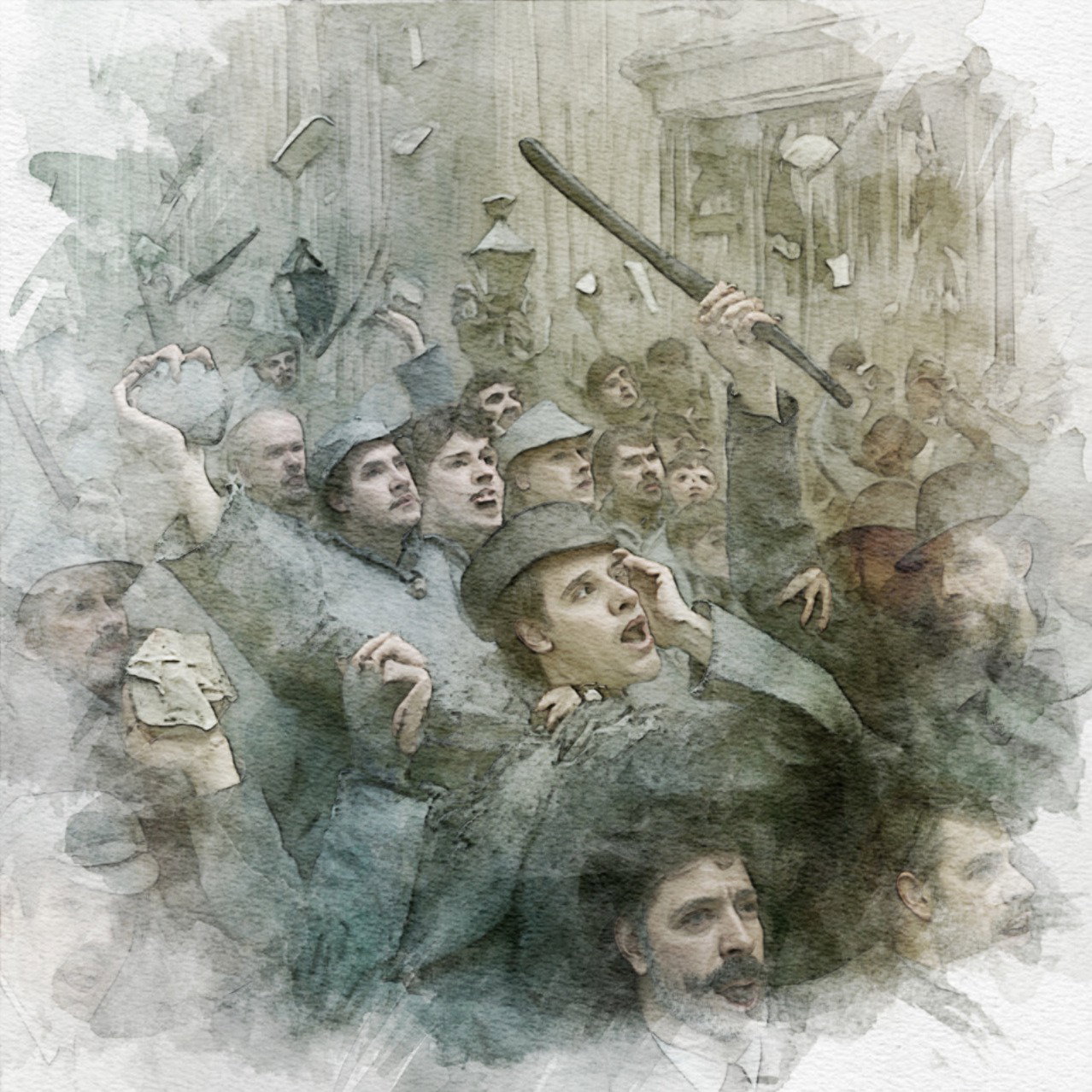
In November 1853, Wigan witnessed some of the most serious industrial disturbances in its nineteenth-century history. What began as a dispute over miners' wages escalated into a night of rioting, destruction and confrontation that left parts of the town badly damaged and required the intervention of soldiers and cavalry to restore order.
Contemporary newspaper reports portrayed the rioters as a lawless mob and condemned the strike movement that had given rise to the unrest. However, behind the dramatic scenes lay deeper social and economic tensions that had been building for many years in the rapidly industrialising coalfield around Wigan.
A Town Built on Coal
By the middle of the nineteenth century, Wigan had become one of Lancashire's most important coal mining centres. The growth of the railways, factories and ironworks created an enormous demand for coal, and collieries stretched across the district from Haigh and Aspull to Ince and Pemberton.
Despite the wealth generated by the industry, conditions for miners were often harsh. Working days were long, accidents were common and employment was insecure. Wages fluctuated according to trade conditions and the price of coal, leaving many families vulnerable to poverty whenever demand declined.
The years leading up to 1853 were marked by economic uncertainty. Although Britain was experiencing industrial growth, workers frequently found that rising food prices and rents consumed much of their earnings. Miners believed they deserved a larger share of the profits being made from the expanding coal trade.
The Wage Dispute
In the autumn of 1853, many colliers in the Wigan district were involved in a strike seeking an increase in wages. The men hoped to secure an advance of one penny in the shilling—equivalent to roughly an eight per cent increase.
Coal owners met at the Royal Hotel in Wigan Market Place to discuss the dispute. The meeting was chaired by Mr Peace, the general manager of the collieries belonging to the Earl of Crawford and Balcarres, one of the district's largest landowners and coal proprietors.
The miners gathered outside the hotel in large numbers, anxiously awaiting news of the discussions. Their hopes were quickly dashed when they learned that the owners had refused to grant any increase and had merely agreed to reopen the pits at the existing rates of pay.
For men who had already sacrificed wages during the strike, the decision was a bitter disappointment.
Market Day Turns Violent
Friday was Wigan's market day, and the town was already crowded because of the annual autumn cattle fair. Hundreds of striking miners and factory workers were also present, creating an unusually large gathering in the town centre.
As several mine owners and managers left the Royal Hotel, they were followed by an angry crowd. Shouting and jostling soon gave way to violence when stones were thrown through the windows of nearby premises.
The borough police force was tiny by modern standards. Wigan's chief constable had only a handful of officers at his disposal and quickly found himself unable to control the growing crowd. Attempts by local magistrates to persuade people to disperse failed, and the situation rapidly deteriorated.
Street lamps were smashed, plunging parts of the town into darkness. Market stalls were broken up and their timber used as weapons. The Royal Hotel, which had become a symbol of the employers' authority, was subjected to repeated attacks.
As darkness fell, the disturbances spread across Wigan.
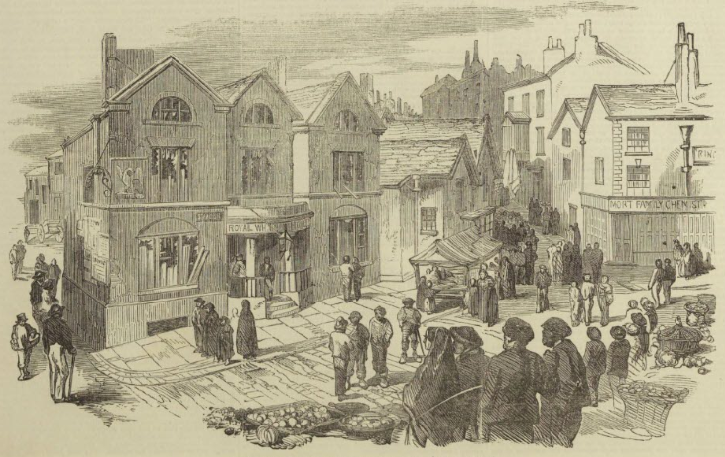
Scene of the Riot - The Royal Hotel
A Night of Destruction
A crowd estimated at around 500 people returned to the Royal Hotel and forced entry into the building. Mirrors, furniture, picture frames and glassware were smashed. Alcohol was stolen and there was even an attempt to set fire to a curtain.
The rioters then moved through various parts of the town, breaking windows and damaging property. Houses belonging to prominent employers were singled out.
One of the worst attacks occurred at the home of cotton spinner Mr. Johnson in Chapel Lane. Having taken refuge elsewhere, he and his family escaped injury, but the mob wrecked much of the contents of the house, destroying musical instruments, furniture and decorative items.
Nearby, the house and business premises of Mr Tipping, another cotton spinner, were similarly targeted. The mob smashed the lower windows of his residence, counting house and warehouse, causing considerable damage. The nearby Bridge Inn in Chapel Lane also suffered broken windows during the disturbances.
The crowd's anger then turned towards local traders. At the corner of Chapel Lane and Darlington Street, a provision dealer's shop was attacked. Its windows were shattered and much of its stock either stolen or destroyed. Continuing through King Street, the rioters damaged further properties before reaching Standishgate, one of Wigan's principal commercial streets.
Here, the shop of Mr Collison, a pawnbroker, came under attack. Windows, shutters and frames were smashed, reflecting the hostility that pawnbrokers often attracted from poorer sections of society. For many working families, pawnbrokers represented a harsh reality of industrial life. During periods of unemployment or low wages, household goods, clothing and personal possessions were frequently pawned to provide money for food and rent. Although pawnbrokers fulfilled an important economic role, they were sometimes viewed as benefiting from the misfortunes of the poor, making them convenient targets during periods of unrest.
The rioters then proceeded along Standishgate and up Wigan Lane to the shop of Mr Liptrot, a grocer and provision dealer. Unlike some of the earlier attacks, this was not merely an act of vandalism. The crowd forced entry into the premises and systematically looted the shop, carrying away supplies of food and other goods before returning towards the town centre. Several of the men later arrested were found in possession of tea, sugar and biscuits believed to have been taken during the disturbances.
The choice of targets reveals much about the nature of the riot. While the immediate cause was the miners' wage dispute, the violence was directed largely at symbols of local authority, wealth and economic power. Cotton manufacturers, mine managers, pawnbrokers and shopkeepers all represented, in different ways, the social and economic structures that many working people believed kept them in poverty. The attacks reflected not only anger over wages but also wider frustrations arising from low pay, insecure employment and the unequal distribution of wealth in industrial Wigan.
For several hours, authourity in the town effectively collapsed.
Calling in the Military
Recognising that the police were overwhelmed, Mayor Joseph Acton ordered urgent assistance.
Messages were sent by railway and electric telegraph to Preston requesting troops. The telegraph, still a relatively new technology, allowed military authorities to be alerted with unprecedented speed.
Shortly before midnight, approximately 150 soldiers of the 34th Regiment arrived in Wigan under the command of Captain Wilt. Accompanied by police and magistrates, they marched through the principal streets.
By this stage, many of the rioters had dispersed. Only a handful were arrested, some carrying goods taken during the disturbances. The presence of the military quickly restored order, and by the following day Wigan was largely quiet.
The Attack on the Strikebreakers
The unrest did not end with the riot in the town centre.
Determined to continue coal production, the Earl of Balcarres' agent, Mr Peace, recruited replacement workers from Wales. These men were brought to accommodation at the New Springs Saw Mills on the outskirts of Wigan.
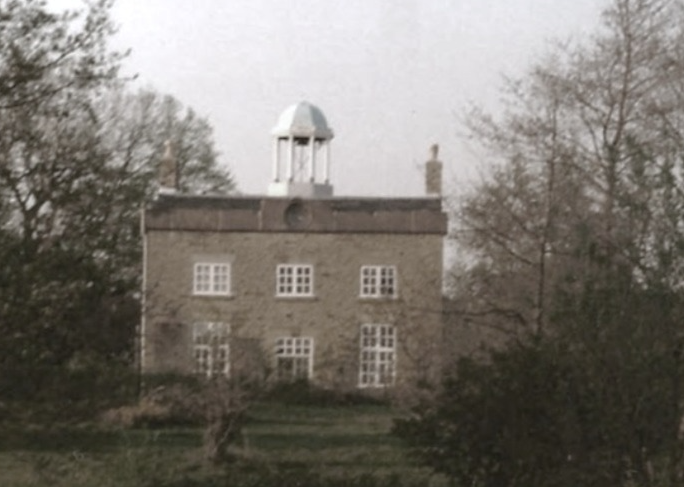 Sawmill House
To the striking miners, the arrival of these "blacklegs" or strikebreakers, from Wales, represented a direct threat to their bargaining power and livelihoods.
On the Monday evening following the riot, several hundred men gathered and marched on the Saw Mills. Armed with sticks and stones, they attempted to force their way into the compound.
Police under Inspector Gillett defended the site behind timber barricades. During the confrontation shots were fired from within the premises. Although reports suggested some of the attackers may have been wounded, no precise figures were recorded.
Troops were again summoned, and later a troop of the 1st Royal Dragoons arrived from Manchester. The authorities feared that the disturbances might spread throughout the coalfield.
Politics and Working-Class Protest
The disturbances occurred during a period when many working people felt excluded from political power.
Although the Reform Act of 1832 had extended voting rights, miners and factory workers remained unable to vote. The memory of the Chartist movement, which had demanded universal male suffrage and political reform during the 1830s and 1840s, was still fresh. Many workers believed that Parliament and local authorities represented the interests of landowners and industrialists rather than ordinary labourers.
Trade unions remained relatively weak and often lacked legal recognition or effective negotiating power. In such circumstances, strikes were one of the few means available for workers to express collective grievances.
Employers, however, frequently viewed strikes as threats to public order and economic stability. The newspaper coverage of the Wigan disturbances reflected this attitude, arguing that wages should be determined solely by market forces and condemning collective action by workers.
Aftermath and Legacy
The Wigan riots of November 1853 highlighted the fragile relationship between labour and capital in one of Britain's major industrial districts.
While the violence was condemned by many contemporaries, it also revealed the desperation felt by sections of the working population. The attacks were not random acts of vandalism but were directed largely against symbols of authority, wealth and opposition to the strike.
The events demonstrated how quickly industrial disputes could develop into wider social unrest when economic hardship, political exclusion and community tensions combined.
In later decades, the growth of stronger trade unions, improvements in working conditions and gradual extensions of the franchise would provide workers with more peaceful means of pursuing their demands. Yet the disturbances of 1853 remain a vivid reminder of the hardships endured by Wigan's mining communities and the turbulent struggles that accompanied the town's industrial development.
Today, the riot stands as one of the most dramatic episodes in nineteenth-century Wigan history, illustrating both the importance of coal to the town's prosperity and the deep social divisions that industrialisation could create.
Michael Nelson. 2026
Sources:-
Findmypast,
Illustrated London News,
New York Tribune
Postscript
Article by Karl Marx - New York Daily Tribune, November 4 1853;
With regard to the Wigan riots, Mr. Cowell, the leader of the laborers at Preston, has declared in a public meeting that he very much regretted what had occurred in Wigan. He was sorry the people of Wigan had no more sense than to have recourse to a system of leveling. There was no sense in working people collecting together and destroying the property they had produced. The property itself never did them any injury — it was the men that held the property that were the tyrants. Let them respect property and life, and by proceeding in a peaceable, orderly and quiet manner, they might rely on the struggle terminating in their favor.Now I am far from defending the aimless acts of violence committed by the Wigan colliers, who have paid for them with the blood of seven men. But, on the other hand, I understand that there is a great difficulty, especially for the inferior elements of the working classes, to which the colliers undoubtedly belong, in proceeding “peaceably, orderly and quietly,” when they are driven to acts of frenzy by utter destitution and by the cool insolence of their masters. The riots are provoked by the latter in order to enable themselves to appeal to the armed force and to put down, as they have done in Wigan, all meetings of the workingmen by order of the magistrates. The riot which occurred in the town of Wigan, on Friday afternoon, was occasioned by the coal kings of the district meeting in large numbers at Whiteside’s Royal Hotel, in order to deliberate on the demands of the colliers, and by their coming to the resolution to repudiate all compromise with the men. The attack on the saw-mills at Haigh, near Wigan, which occurred on Monday, was directed against the foreign colliers, brought over from Wales ... in order to replace the turnouts of the coal pits.The colliers were certainly not right in preventing their fellow-laborers, by violence, from doing the work they had abandoned themselves. But when we see the masters pledging each other by heavy fines, with a view to enforce their lock-out, can we be astonished at the more rude and less hypocritical manner in which the men attempt to enforce their turn-out?