George Walker of Wigan: The Man Who Helped Discover the World's Greatest Goldfield
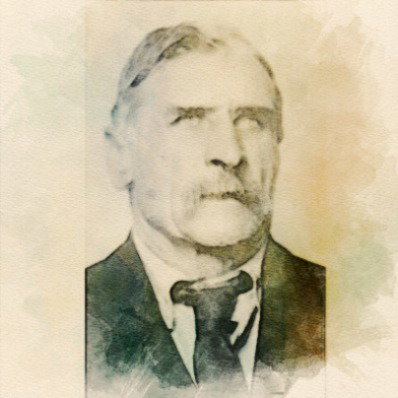
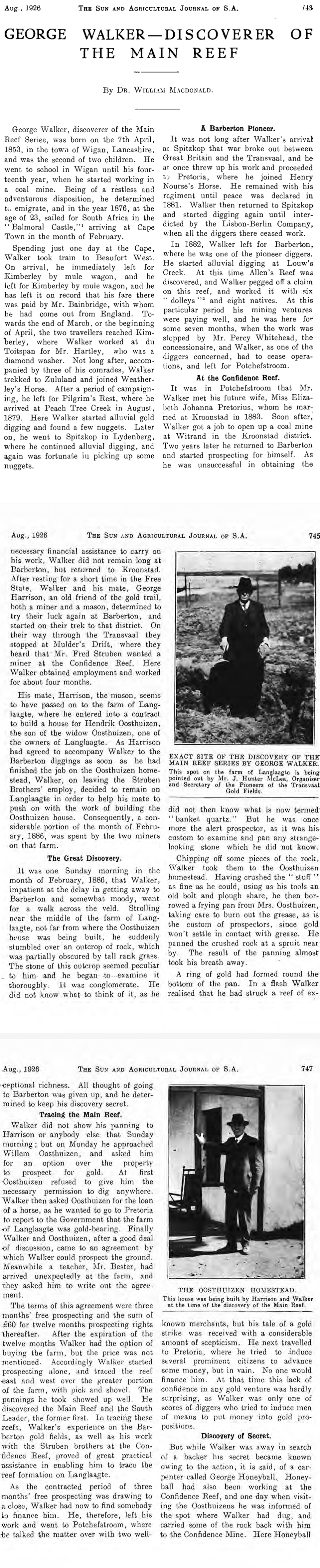
Among the many Wigan men who sought a better life overseas during the nineteenth century, few had a more remarkable story than George Walker, a Wigan-born miner whose name became linked with one of the greatest gold discoveries in history. Yet despite helping to uncover the riches that created Johannesburg and transformed South Africa, Walker appears to have died in poverty.
George Walker was born in Wigan in 1853, at a time when the town was rapidly expanding through coal mining, engineering and manufacturing. Like many young Wiganers, he entered the mining industry, working in the coalfields before seeking opportunities abroad. He emigrated to South Africa while still a young man and spent much of his life as a prospector and miner.
From Wigan Coal Miner to African Prospector
Walker's early years in South Africa were typical of many adventurous fortune-seekers of the era. He worked on the diamond diggings at Kimberley, served during the Zulu War, and later searched for gold in the eastern Transvaal. By the mid-1880s he had become associated with the pioneering prospectors Fred and Harry Struben, who were searching for gold-bearing reefs in the Witwatersrand region.
The Witwatersrand, a ridge of hills south of present-day Johannesburg, had shown signs of gold, but no one yet realised that beneath the ground lay the richest gold-bearing deposits the world had ever seen.
The Discovery That Changed South Africa
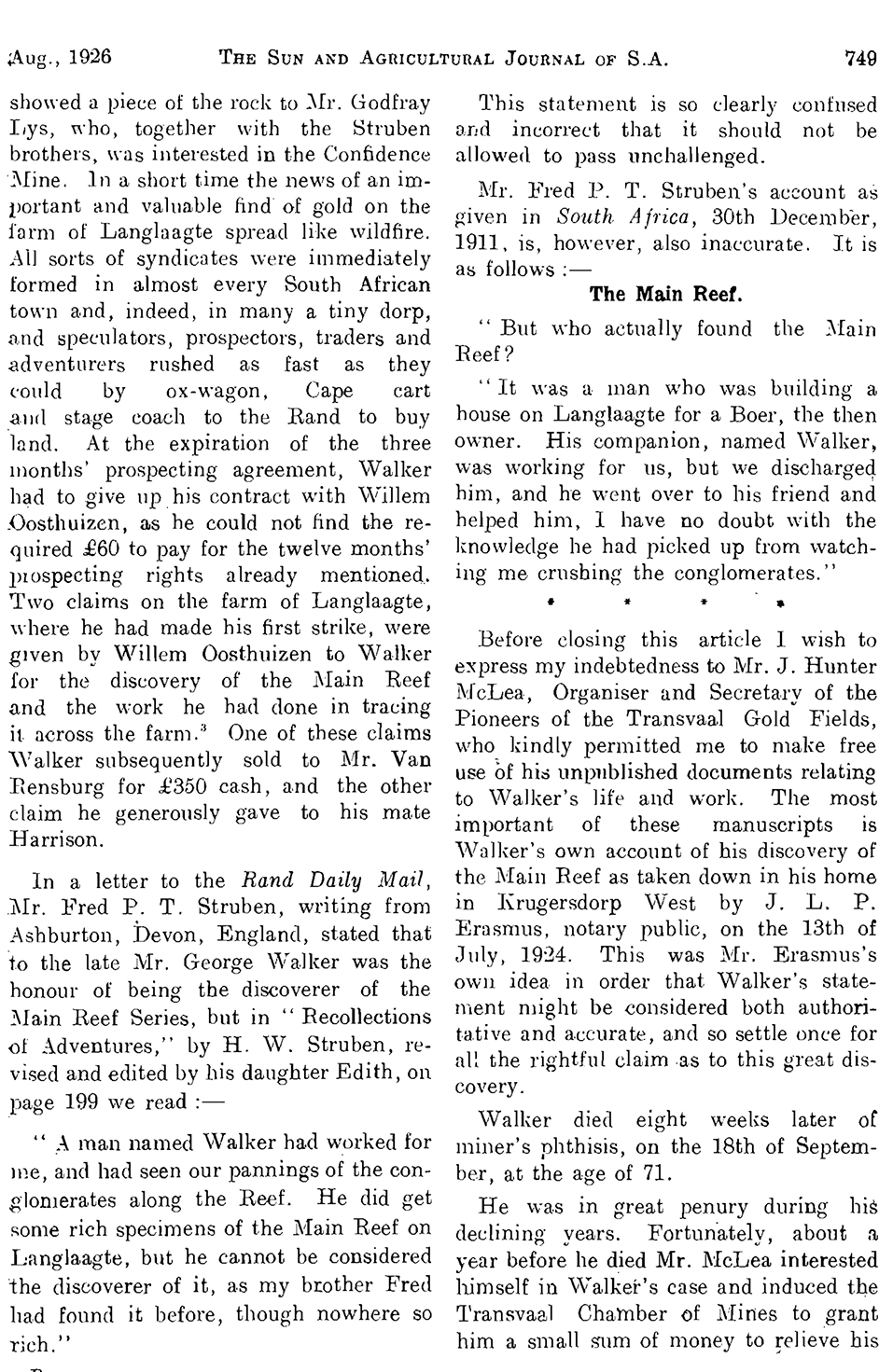
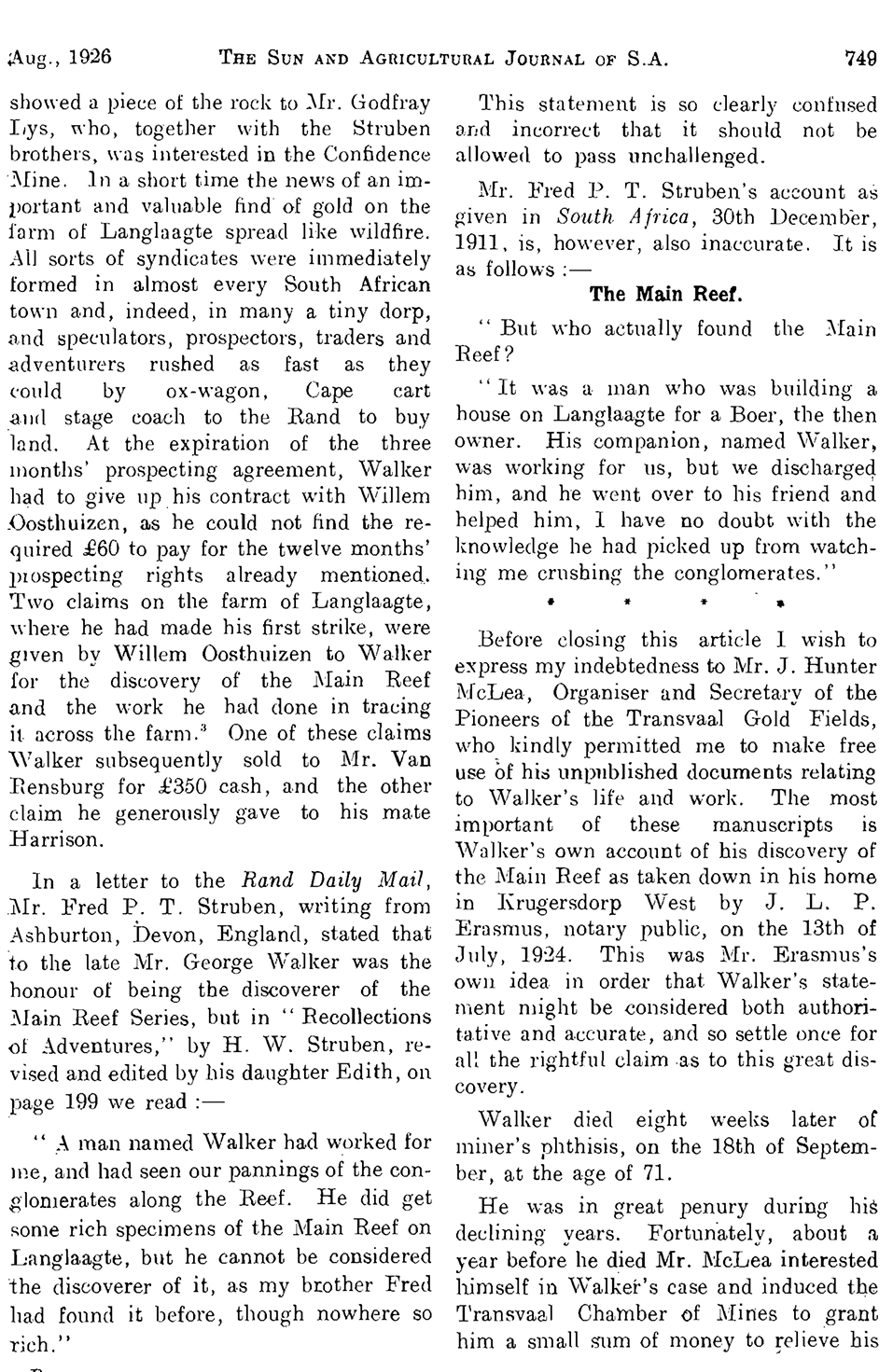
In early 1886 Walker was working near the Strubens' Confidence Reef. Historical accounts differ over precisely who first recognised the significance of the gold-bearing rock, but Walker's name is inseparably linked with the discovery. Some accounts state that he found gold while digging foundations for a house at Langlaagte, while others describe him and fellow prospector George Harrison as working together when the reef was identified.
The discovery sparked an extraordinary gold rush. Within months thousands of prospectors had arrived, and what had been open countryside quickly became a sprawling mining camp. Soon afterwards the settlement of Johannesburg was established, growing into the largest city in South Africa.
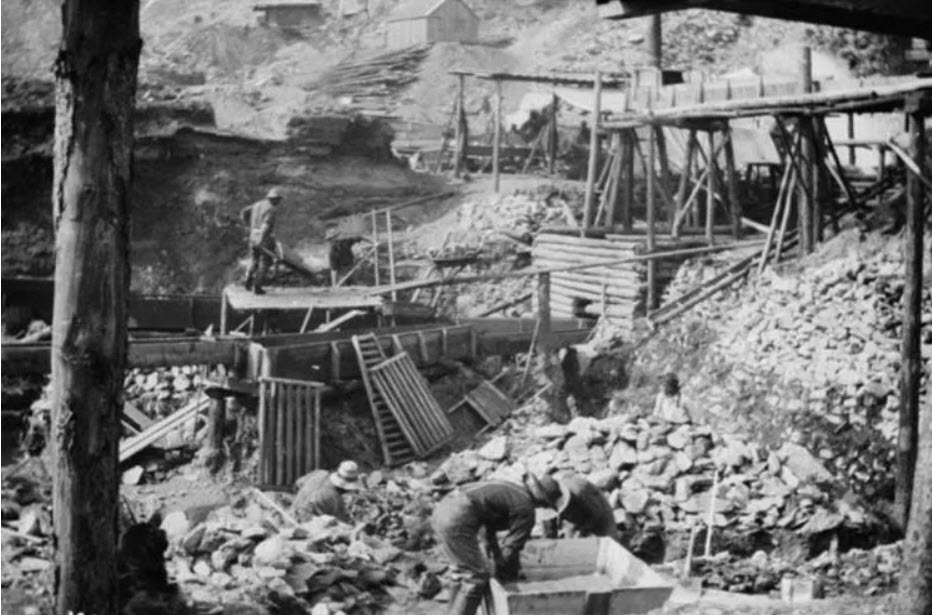
Scene of the goldfield after the discovery
The goldfield proved to be the famous Witwatersrand Main Reef, which ultimately produced more gold than any other goldfield in history. The importance of the discovery can hardly be overstated.
The wealth generated by the Rand goldfields transformed the South African economy, attracted international investment, and played a major role in the political tensions that eventually contributed to the Anglo-Boer War.
The Dispute Over Credit
Despite Walker's involvement, controversy surrounded the question of who actually discovered the Main Reef. Official recognition was largely given to George Harrison, who received the formal "Discoverer's Claim" in 1886. Walker himself signed documents at the time acknowledging Harrison as the discoverer.
However, many later writers described Walker as a co-discoverer, while some even argued that he was the true discoverer whose contribution had been overlooked. South African historical sources continue to acknowledge him as one of the men most closely associated with the finding of the Main Reef.
Whatever the exact circumstances, there is little doubt that Walker was present at one of the most significant moments in mining history.
Riches for Others, Poverty for Walker
The great irony of George Walker's life is that while his discovery helped generate fortunes for mining companies and investors, he gained little lasting benefit himself.
Unlike later mining magnates and "Randlords" who amassed enormous wealth, Walker never became rich. Reports published after his death stated that he lived his final years in poor circumstances and was dependent upon a small allowance from the mining industry. A contemporary newspaper noted that "almost his only asset" was a modest payment from the Chamber of Mines.
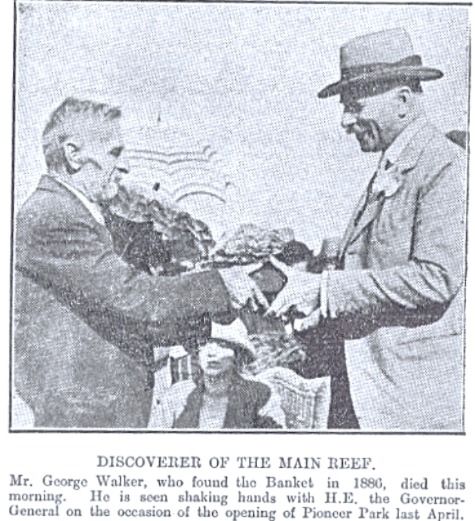
Walker died at Krugersdorp, South Africa, on 18 September 1924, aged about seventy-one. Contemporary accounts described him as dying in poverty, having received little recognition for his role in discovering the reef that created the world's greatest gold-mining industry.
A Forgotten Wigan Pioneer
Today George Walker is little remembered in his native Wigan, yet his story deserves a place alongside those local men whose lives carried them far beyond Lancashire. Born in a coal-mining town, he journeyed to southern Africa and became associated with a discovery that altered the course of a continent's history.
While others reaped immense fortunes from the goldfields of the Witwatersrand, Walker's own reward was meagre. His life serves as a reminder that many of the pioneers who opened up the world's great mining frontiers often gained far less than those who followed.
For Wigan, George Walker remains a remarkable example of a local man whose actions helped shape the modern world, even if history never fully rewarded him for it.
Michael Nelson 2026
Sources:
South African History Online
Papers Past - Marlborough Express
Taylor & Francis OnLine
World History Encyclopaedia.
City of Johannesburg.
FindmyPast.
Some additional information:-