Jack Tilley & Edna Mountford Wigan’s Quiet Voices in a Secret War

Jack Tilley & Edna Mountford
In wartime Britain, some of the most important battles were fought not with guns, but with headphones, Morse code, and minds trained to listen. In Wigan, two such unsung figures — Edna Mountford and Jack Tilley — played their part in the vast intelligence network that helped turn the tide of the Second World War.
For decades, their contribution remained hidden behind ordinary lives: one a respected local businessman in radio and electronics, the other known simply as a devoted wife and mother. Only later did the full scale of their wartime work begin to emerge.
Jack Tilley: The Wireless Pioneer
Jack Tilley (1899–1985), sometimes known as John, was a leading figure in Wigan’s early radio industry. As owner of the Central Wireless Company, he helped bring sound and news into thousands of homes at a time when most households had no mains electricity.
In the early 1930s, around three-quarters of homes in Wigan had no access to AC electricity. Seeing an opportunity, Tilley developed the Central Wireless Radio Relay Service, based at 52, Standishgate, the old Savings Bank building.
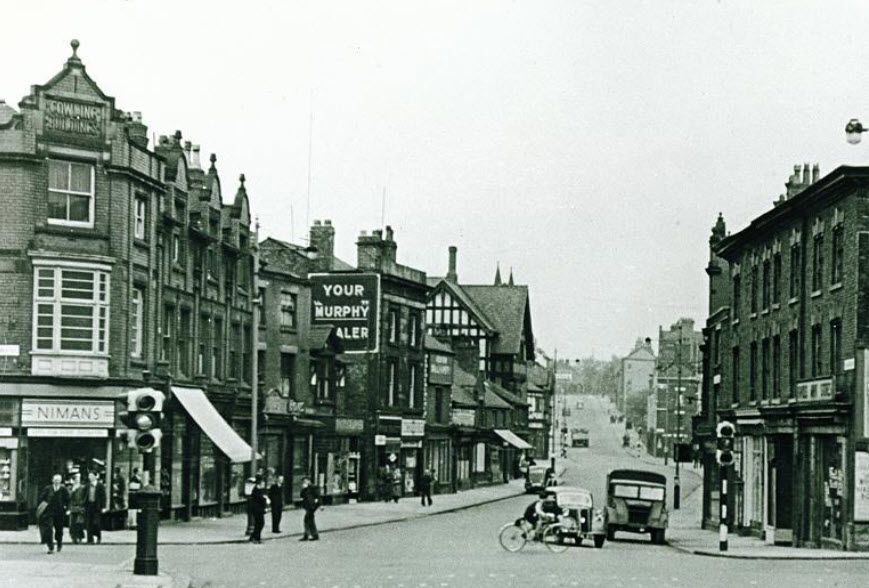
Central Wireless "Your Murphy Dealer"
This “wired wireless” system received BBC broadcasts at a central hub and distributed them to subscribers’ homes via physical cables, allowing families to listen through a simple speaker box. It provided reliable reception without the need for expensive radio sets or strong electrical supply.
The service became a vital source of news and entertainment for working-class communities, particularly in industrial areas. Subscribers could tune into the BBC National Programme, the Regional Programme, and later the Third Programme.
Tilley’s technical expertise did not go unnoticed. When war broke out in 1939, his deep knowledge of radio and wireless brought him into contact with the Government Code and Cipher School, the organisation at the heart of Britain’s codebreaking effort. It was through this connection that he quietly recruited a young woman whose talents would prove invaluable.
Edna Agnes Mountford: The Listener in the Attic
Born Agnes Battersby in Preston in 1918, Edna moved to Wigan as a child. Bright, disciplined, and blessed with an exceptional memory, she left school at 17 after her father’s death to help support her family. She trained in typing and shorthand and became Jack Tilley’s secretary.
Recognising her intelligence, discretion, and focus, Tilley drew her into wartime intelligence work.
Throughout the war, Edna operated a covert “Y” station — a wireless interception post — from a cottage on the Haigh Hall estate. After finishing her day job, she would climb to the third floor each evening, put on her headset, and spend hours listening to radio transmissions cutting through the static of the night.
For six years, she transcribed coded and uncoded messages sent by both Allied and German servicemen, including signals enciphered using the Enigma machine. Her work demanded intense concentration and patience. She later remembered the frustration of long hours spent copying material that turned out to be trivial:
“You could take something down for two hours, then find what the crux was in the last bit you took down, which could be something like ‘potatoes for dinner’ or ‘see you later’.”
The transcripts she produced were transported to Station X at Bletchley Park, where mathematicians and cryptanalysts worked to break enemy codes. Speed was essential — agents and Resistance networks often had only minutes to transmit before risking detection.
Historians now believe intelligence from Bletchley Park shortened the war by at least two years. At the time, Edna had little idea of the importance of her role. Feeling she “wasn’t doing enough,” she also volunteered with the Red Cross on Sundays, helping bomb victims and wounded servicemen.
From War Work to World Travel
Jack Tilley’s business continued to grow during and after the war, including a radio parts service. Among those he employed was New Zealand rugby league player Brian Nordgren, who later helped organise exports of radio components to Auckland.
It was through Tilley’s workplace that Edna’s life took a new turn. In 1946, another young New Zealander, Ces Mountford, arrived in Wigan to play professional rugby league. A visit to Tilley’s business led to a meeting with Edna.
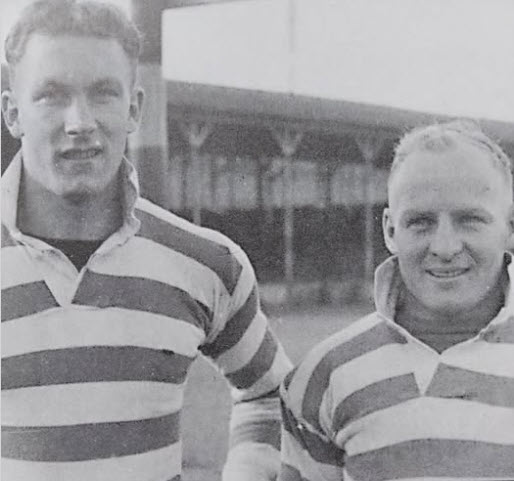
Brian Nordgren & Ces Mountford
They married in 1948 and soon set off on an adventurous new chapter, flying by American Airlines seaplane from Britain to New Zealand — a rare and glamorous journey at the time.
A Life of Support and Secrecy
While Ces Mountford built a distinguished career in rugby league — later becoming a respected coach and administrator, earning an MBE in 1987 and induction into the New Zealand Sports Hall of Fame — Edna remained his constant support.
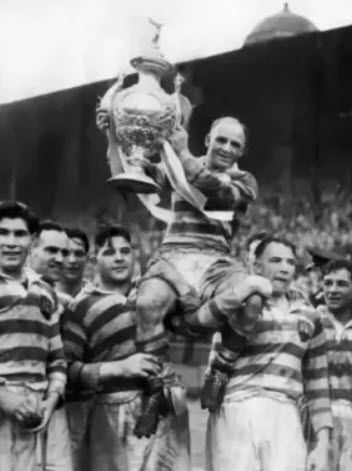
Ces with the Challenge Cup in 1951
She acted as his personal secretary, organised his affairs, and even ghost-wrote articles under his name. They raised two children, Carolyn (born 1950) and Kim (born 1954). The family settled in New Zealand in 1961 and later retired to Australia.
Through it all, Edna kept her wartime service secret. Even Ces never knew the full story. He died in 2009, before her role became publicly known.
Jack Tilley’s Later Years
After the war, Tilley expanded into television and electronics retail. In 1955, Thorn Electrical Industries invested £25,000 in his business, which became Central Wireless Company Limited, with Tilley as chairman and managing director. Shops opened across Wigan and the surrounding districts.
By the early 1960s, with mains electricity now widespread and television on the rise, the old Radio Relay Service was wound down. In 1967, after more than 35 years in business, Tilley retired following the sale of his company to the TV rental group Telehire (later Visionhire).
A prominent figure in local life, he was active in organisations such as Wigan Rotary Club (serving as President in 1954) and the Wigan Round Table, and was well known among the town’s rugby league community.
Recognition at Last
Only late in life did Edna receive formal recognition for her wartime work. She was awarded a Bletchley Park Medal and Certificate, presented by former Prime Minister Gordon Brown, honouring her role in the secret intelligence network that helped defeat Nazi Germany.
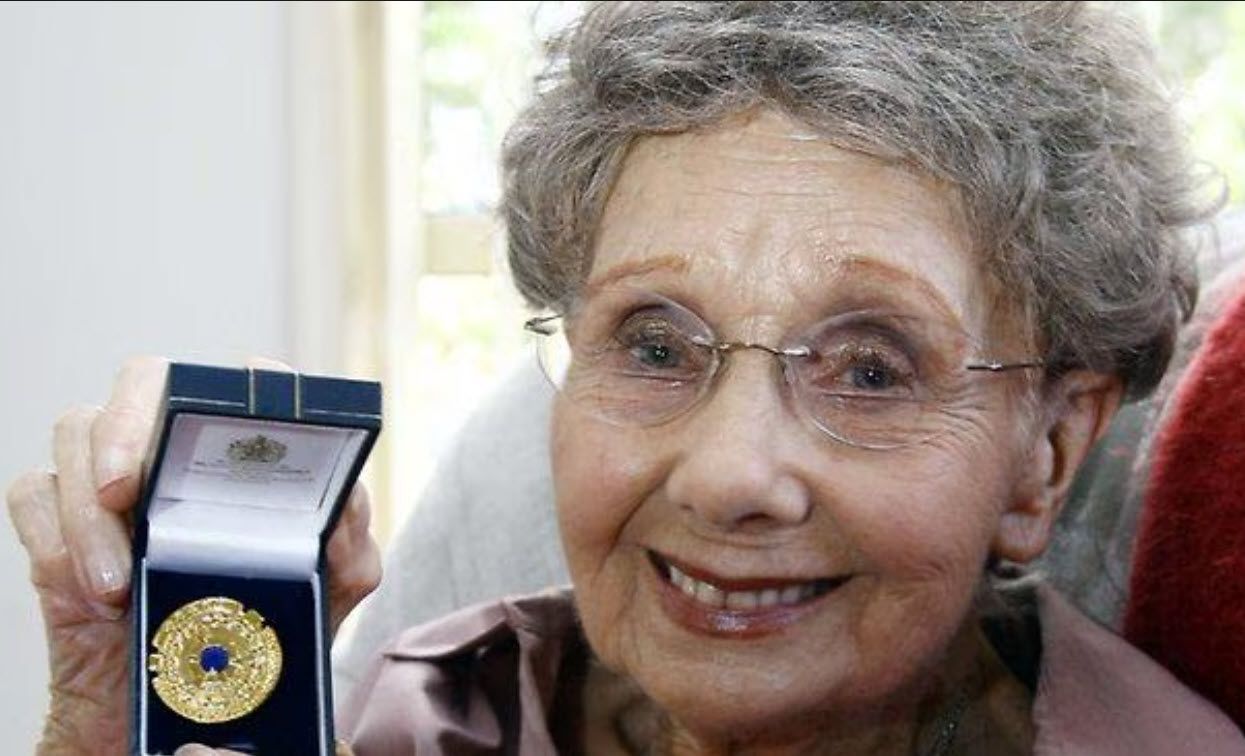
Edna & Bletchley Park Medal
It was a bittersweet honour — long overdue, and shared without the husband who had never known the truth.
Edna Agnes Mountford died on the Gold Coast in 2009, remembered as a loving mother and grandmother — and, finally, as one of the quiet listeners whose work in a small room in Haigh fed into one of the greatest intelligence triumphs in history.
Two Lives, One Hidden Legacy
Jack Tilley provided the technical skill, infrastructure, and connections. Edna Mountford provided the patience, precision, and dedication night after night. Together, in different but linked ways, they helped ensure that vital information flowed from the airwaves of occupied Europe to the codebreakers of Bletchley Park.
Their stories remind us that some of the war’s most vital work was carried out far from the battlefield — in workshops, offices, and quiet attics — by ordinary people entrusted with extraordinary secrets.
John Fleetwood (ex Central Wireless engineer)
Post Script - Still looking for a photo of Jack Tilley
Sources; Courier Mail, Find my Past, National Archives.