Francis Edmond CBE, 1881-1966
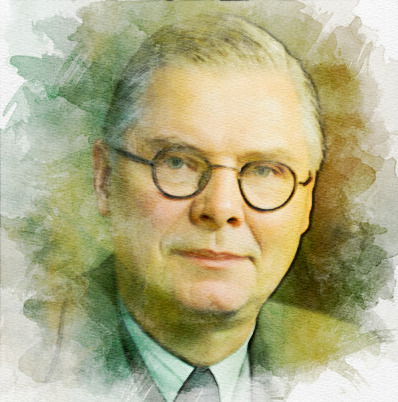
None could have been more proud of the industry he served than my grandfather, Francis Edmond, who was always known as Frank, and none would have been more dismayed by what has affected the industry since 1984, although I’ve no doubt he would have taken some small pleasure from the subsequent turn of events in Nottinghamshire.
Frank was born on the 14th of September 1881 at the family home, 64 Bon Accord Street, in Aberdeen, Scotland. He was the sixth child of John Philip Edmond and his wife, Barbara Janet Sinclair, and was their second son. Eventually, the family would grow to be eleven children, but only Frank and three of his sisters would reach old age, such was the scourge of tuberculosis.
J.P.Edmond was initially in partnership with his father, John Edmond, running the family bookbinding and publishing business in Queen Street, Aberdeen. In October 1888 he resigned to become the Assistant Librarian at Sion College in London, and then in 1891, after having had much contact through the family business, he became Chief Librarian to the Earl of Crawford, responsible for cataloguing the Bibliotheca Lindesiana after its move from Dunecht, Aberdeenshire, to Haigh Hall, in Lancashire, as well as helping the earl identify possible manuscripts for sale around Europe.
So, aged 6 years, Frank and his family moved from Aberdeen to London, residing at 102 Percy Road, just off the Uxbridge Road in Hammersmith, W12 (at which address he was noted as living with his mother and siblings at the time of the 1891 census), and then, in September 1891, to Haigh, near Wigan, Lancashire, where they lived at The Moat House, part of the Haigh Hall estate. The 1901 census lists him in the household, and his occupation by that time was Mining Engineer.
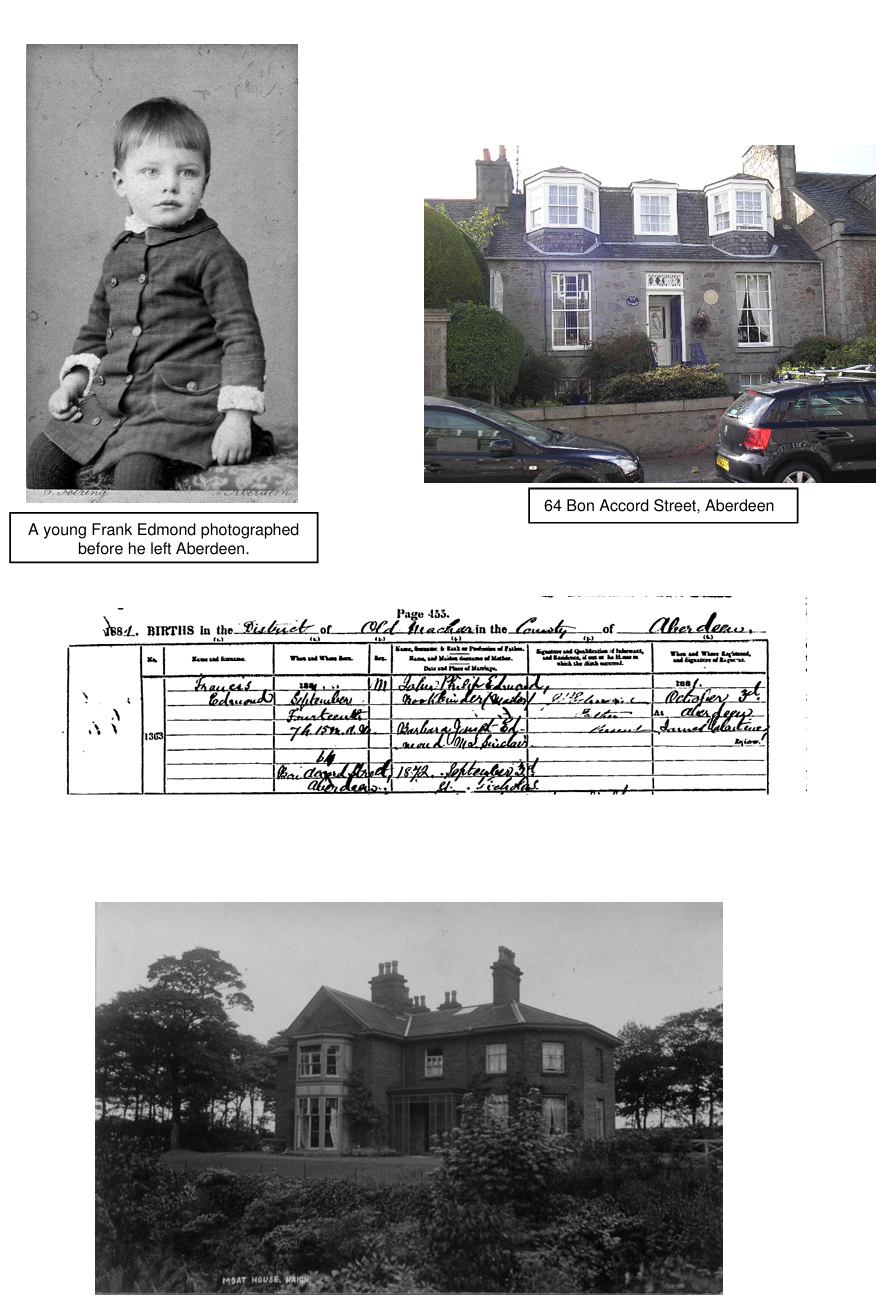
Moat House Haigh
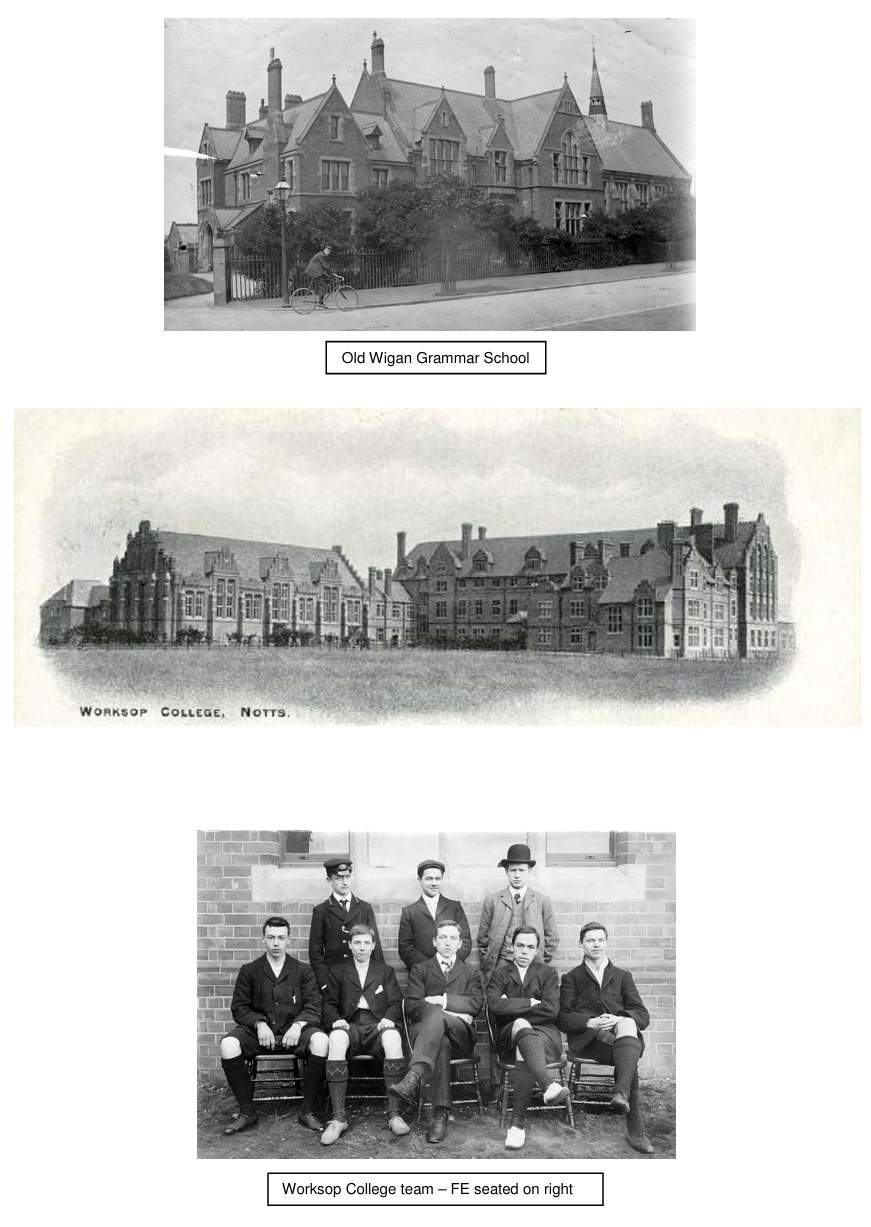
He was educated firstly at Wigan Grammar School and then, to avoid the risks of contracting TB, and with the financial support of Lord Crawford, his father’s employer, he was sent away to St. Cuthbert’s College, Worksop, Nottinghamshire, which he joined in January 1896. He left in 1899, having decided that he wanted nothing to do with books, which he blamed for the outbreak of TB which had been responsible for the deaths of his older brother and two sisters, and the long periods of absence of his father.
Lord Crawford was one of the country’s major colliery owners, operating most of the Lancashire coalfield, and as a result, Frank was invited to join the Wigan Coal & Iron Company at Kirkless on 1st July of that year.
There he served his time as a Mining Apprentice, under Alfred Hewlett Esq., passing through the Drawing Office (6 months), Engineering Shops, and Surveyors Dept. (3 years), where he had charge of the Haigh & Aspull quarterly surveys. When he passed out to it was as an Assistant to the Managers at three groups of collieries – 2nd Assistant for Standish District from January to June 1903, and then 1st Assistant for Hindley and Westhoughton Districts from July 1903 until December 1904.
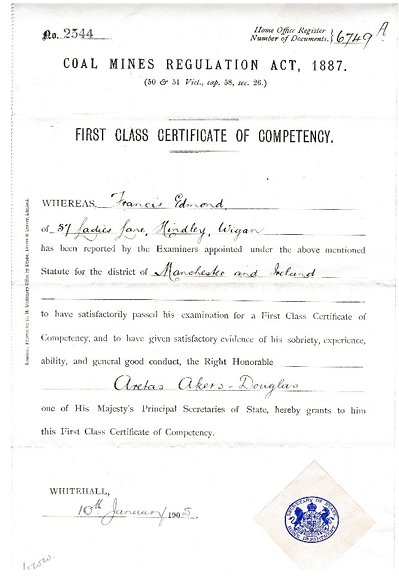
When an apprentice he used to walk 3½ miles downhill after a day in the pits to the mining school, Wigan Mining College, and then walk back home 3½ miles uphill, three or four nights per week! There he achieved a First Class in Principles of Mining, Elementary stage, in May 1900, and Advanced stage in 1901. This was followed by a Second in Geology, Advanced stage, in 1902 and 1903, and finally a Second in Principles of Mining, Stage 3, in 1904. After this he gained his 1st Class Colliery Managers Certificate on the 10th January 1905, and it is interesting to note that his address was 57 Ladies Lane, Hindley.
At the end of January 1906, Frank suffered the loss if his father, who at that time was the Librarian to the Writers of the Signet, in effect the Scottish Law Society, based in Edinburgh, having left the employment of Lord Crawford in 1904.
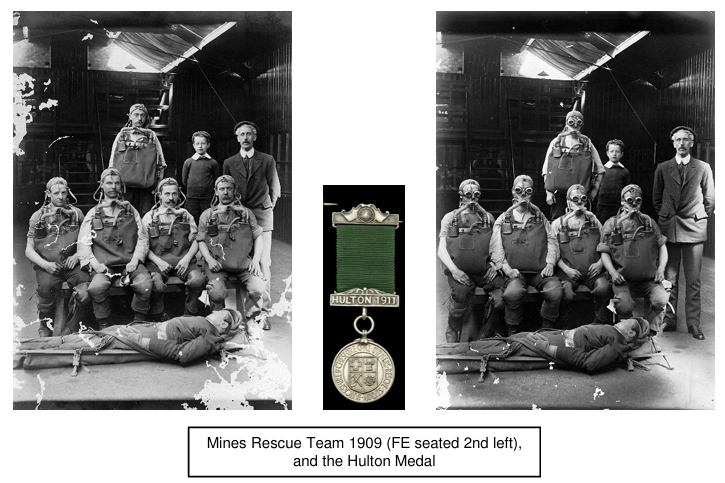
In December that year he was awarded his first aiders certificate by the St. John Ambulance Association, an achievement which probably moulded the future of his career. It led to him joining the Mines Rescue team, and in August 1908, as part of the team, he attended the Maypole Pit disaster, at Abram near Wigan, where 72 lives were lost following an underground explosion.
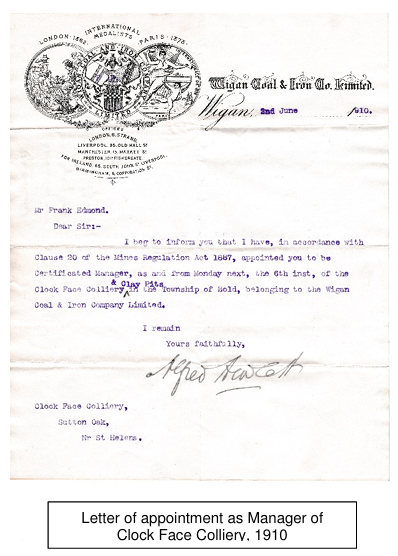
In June 1910 a letter from WC&I Co appoints him as manager of Clock Face Colliery and Clay Pits, in the township of Bold (St. Helens).
In April 1911 a further letter from lists the pits for which he was appointed manager, as follows:
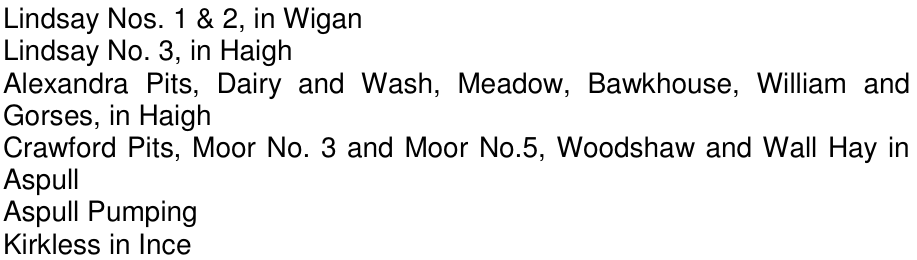
At this time the 1911 Census shows us that he is living at Gorsey Lane, Bold, in the care of a housekeeper, Ann Pattison. Also in this year he was awarded the Royal Humane Society’s Hulton Medal for his rescue work at the Hulton mining disaster the previous year, when an underground explosion at Pretoria Pit, Westhoughton, near Bolton, led to the loss of 344 lives. He was to say that if he were ever in a tight place, he would rather be in the company of a set of Lancashire miners than any other folks he knew. The medal is in the possession of Worksop College.
The Qualification of Surveyor of Mines endorsement was later added to his colliery manager’s certificate in January 1913.
On 1st January 1914, after some consolidation in the coalfield, his responsibilities were as follows:
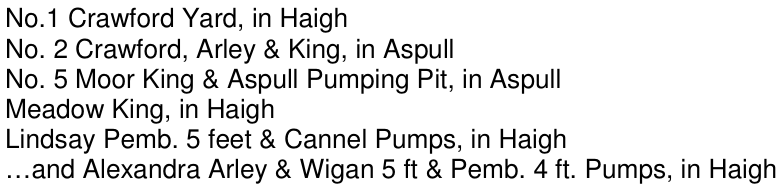
After acting as Certificated Assistant Manager at various districts he was appointed Manager in Charge of the WC&I Co’s collieries at Hindley & Westhoughton, Clock Face, Haigh & Aspull, in turn leading up to Manager of the Standish District in May 1919. This consisted of the following pits: Robin Hill; Langtree; Broomfield; Prospect; Victoria; Gidlow; Giants Hall; Taylor; and John Pit.
The First World War impacted much of this period, but being in a reserved occupation meant that Frank was spared service in the armed forces, despite attesting and requesting the opportunity to serve. He did, however, become a Special Constable of the Lancashire Constabulary upon the outbreak of hostilities, the letter, addressed to him at Moorland House, Aspull, which accompanied his warrant card being dated the 7th September 1914.
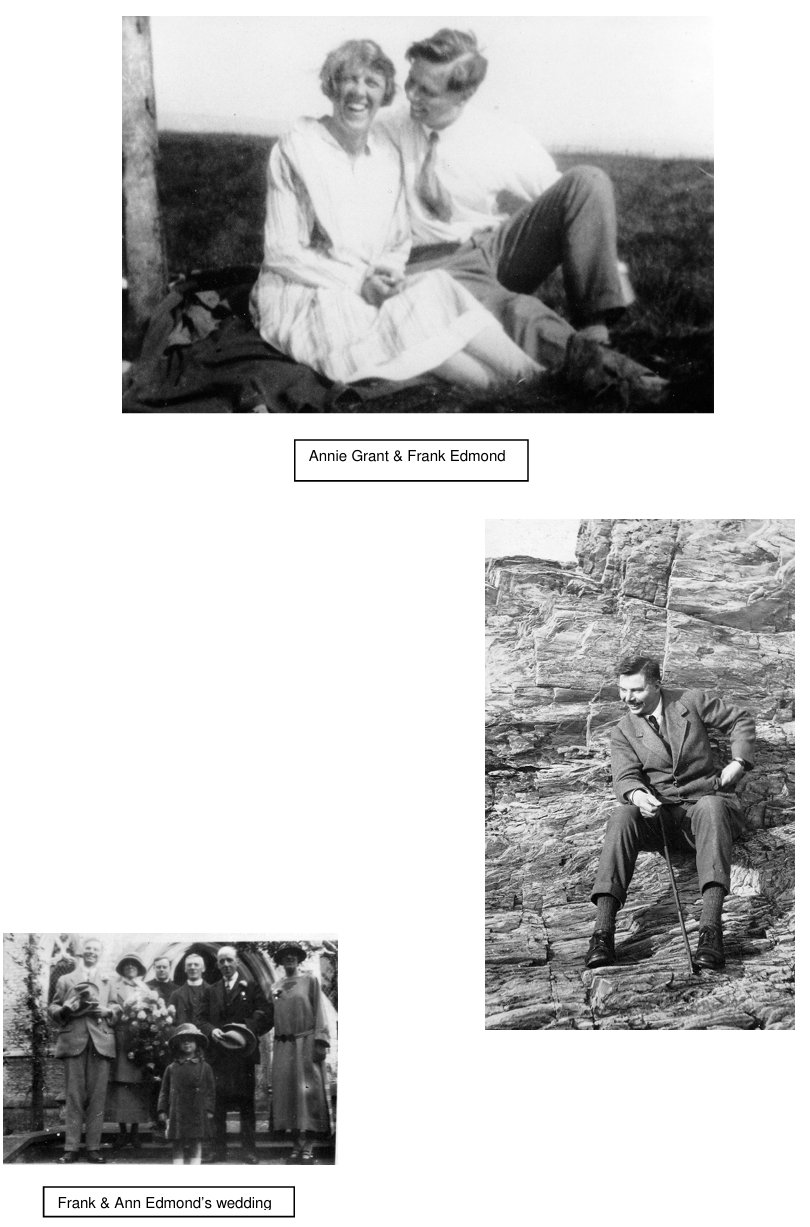
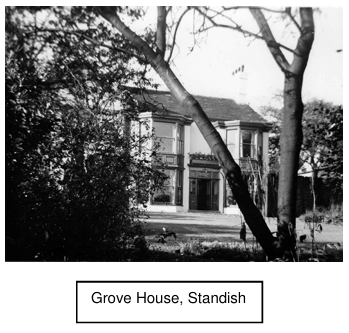
After having lost 7 siblings and his father, he was to lose his mother, to the disease that had killed off so many of her family, in January 1919. However, on a much more positive note, through an invitation to the Lincoln home of a close friend, he met and married his older sister, Ann Maudson Grant, the eldest daughter of Samuel Maudson Grant, Director of Education for Lincoln & Lindsey C.C. Annie was a music teacher, from Lincoln, and they married on 21st September 1923 at St. Mary’s Church, Riseholme, just outside the city. In due course, on 8th February 1925, at their home at Grove House, Standish, their first child, Barbara, was born, soon followed by a second daughter, Margaret, on 31st October 1928.
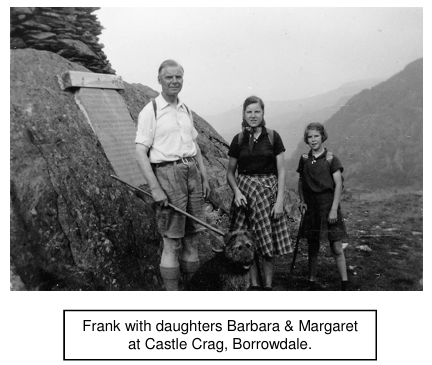
As he settled into married life, he found that Standish was an excellent base for walking, with both the moors and Rivington Pike nearby. This led to a love of the Lake District, where for many years he enjoyed walking holidays with his growing family from a base in the shadow of Skiddaw.
In April 1929 he was appointed Agent of all the Company’s Wigan collieries, and in October 1930 Agent for all the Lancashire Collieries, with the exception of Clock Face. In time he became the General Manager of all their collieries in Lancashire and Nottinghamshire. In 1929 he instigated a number of investigations into atmospheric conditions in hot and deep mines; one of the mines in the group, Parsonage, was at that time the deepest pit in the country, with some workings as much as 4000 feet below ground. At this point a rock temperature of 115°F and air temperatures of between 96° and 105° were encountered. This work in connection with deep mining conditions brought him into contact with the Safety in Mines Research Board (SMRB), at Sheffield, with which he was associated for the rest of his career.
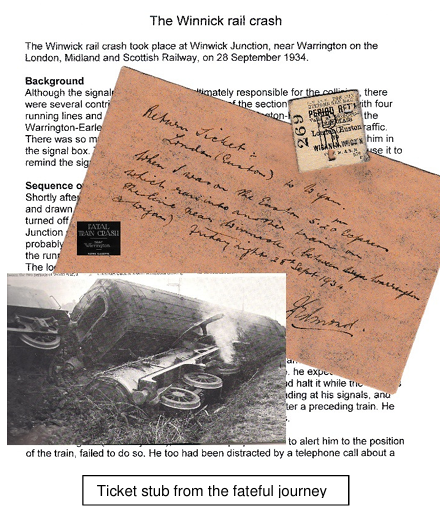
With his responsibilities involving an increased need to travel around the country, Frank became a frequent rail traveller, and on one of his journeys home from London he was involved in the Winnick Junction rail crash on the night of 28th September 1934, when due to a signalling error the Euston express on which he was travelling ran into a local train. Luckily he survived to tell the tale, but three passengers on his train died, along with the guard and five passengers on the local; a further two passenger died later in hospital.
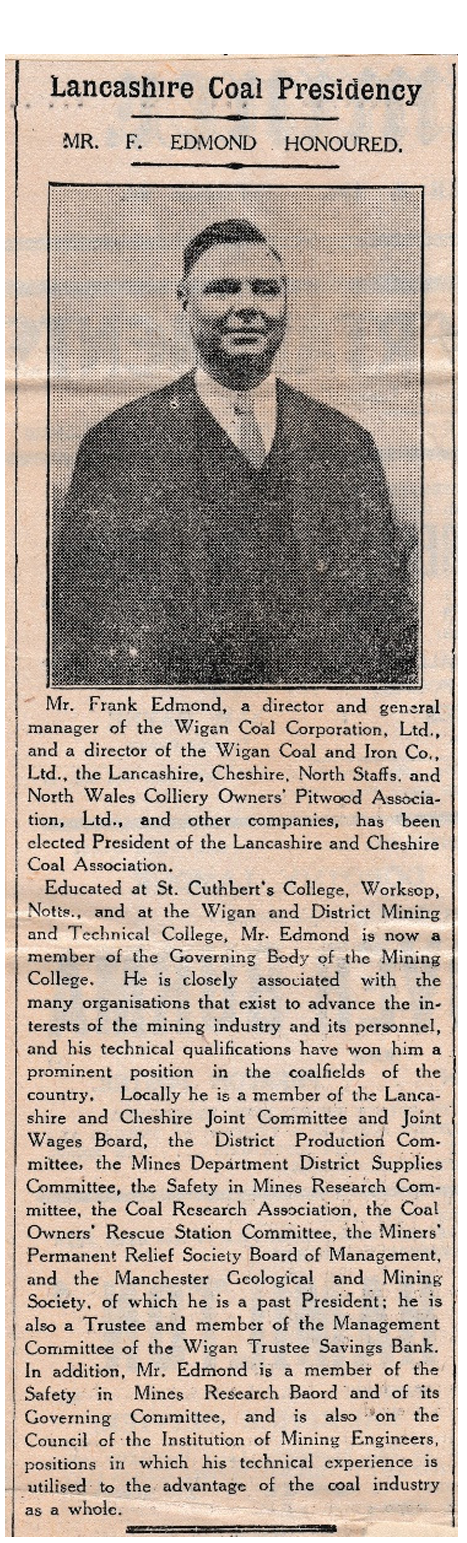
When Wigan Coal & Iron and Pearson & Knowles amalgamated in 1930, the Wigan Coal Corporation was formed. In 1934 Frank was appointed General Mines Manager, and three years later he became a member of the Board of Directors. In 1944, prior to nationalisation, he became Director and General Manager of the Wigan Coal Corporation, and had been since 1935 a Director of the Wigan Coal & Iron Company Ltd. (a holding company). In 1947, upon nationalisation, he became General Manager of No.2 (Wigan) Area in the NCB North West Division, until he retired on 29th September 1951, after 52 years’ service.
Nationalisation was a great disappointment to Frank, and having been involved in its preparation was of little comfort, for he knew what was coming. He wrote to his daughter, Barbara, in February 1945, telling her that he had been to a “big important meeting” of Coal Owners and Mr Robert Foot in Sheffield, and was due to meet him again in Manchester the next day. The meeting was to discuss Foot’s report, “A Plan for Coal”, which was the alternative proposal to the miner’s union-led call for nationalisation. Having fought for mineworker’s rights, and particularly their safety, throughout his career, he felt deeply that the argument for nationalisation, based on an attack on the current ownership and management of the industry, was a betrayal of his support.
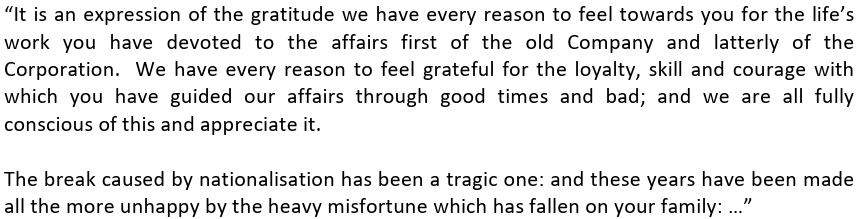
To then have to retire further compounded his sense of loss. Although aged 70, Frank had no desire to leave the industry he loved. There was a great feeling that nationalisation was a politically motivated new broom to sweep away all the private owners and anyone closely associated with them, regardless of their value to the future development of the coal industry. In a letter received in October 1950 from his former employer, Lord Crawford, it is clear that he was not alone; yet it clearly indicated the esteem in which he was held. Referring to pension provisions being made for him because of the change of circumstances, Lord Crawford writes:
Frank had been a member of the Safety in Mines Research Board for several years, where his primary interest had been in roof control – to be precise, “the mechanics of roof control”. His exploration work around Worksop, prompted by his realisation that the Manton reserves were diminishing after 50 years, led to the sinking of many boreholes, one of which, at his instigation, was at Bevercotes, which went on to become a highly productive, and much automated pit. It was in this pit, and under Frank’s governance, that self-advancing chocks were installed, and that in turn led to the development of a most important aspect of mines safety equipment.
During the 1939-1945 War he acted as Technical Advisor to the Lancashire Coal Controller for the first year or more, and was asked by the government’s Mines Dept. to continue as one of the three-man Governing Committee of the SMRB, which he did until nationalisation, and for which, along with his work on safety in mines generally, he was awarded the CBE in the 1947 Birthday Honours list. So it was that on 9th December he travelled to Buckingham Palace for the investiture.
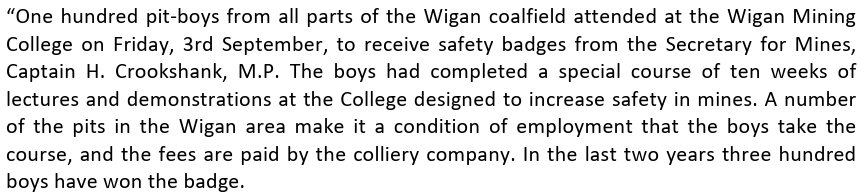
When Manager at Haigh & Aspull he became Chairman of the Urban District Council, and a JP. When Manager at Standish, he was elected a member of that U.D. Council. For many years (since 1912) he was a member of the Governing Body of the Wigan & District Mining & Technical College, and became Vice-Chairman before he retired. He took a keen and active interest in mining education in all its forms. For example, on 11th September 1937, he again, publicly, identified himself with the safety aspects of working in mines: the Science & Art of Mining publication records:
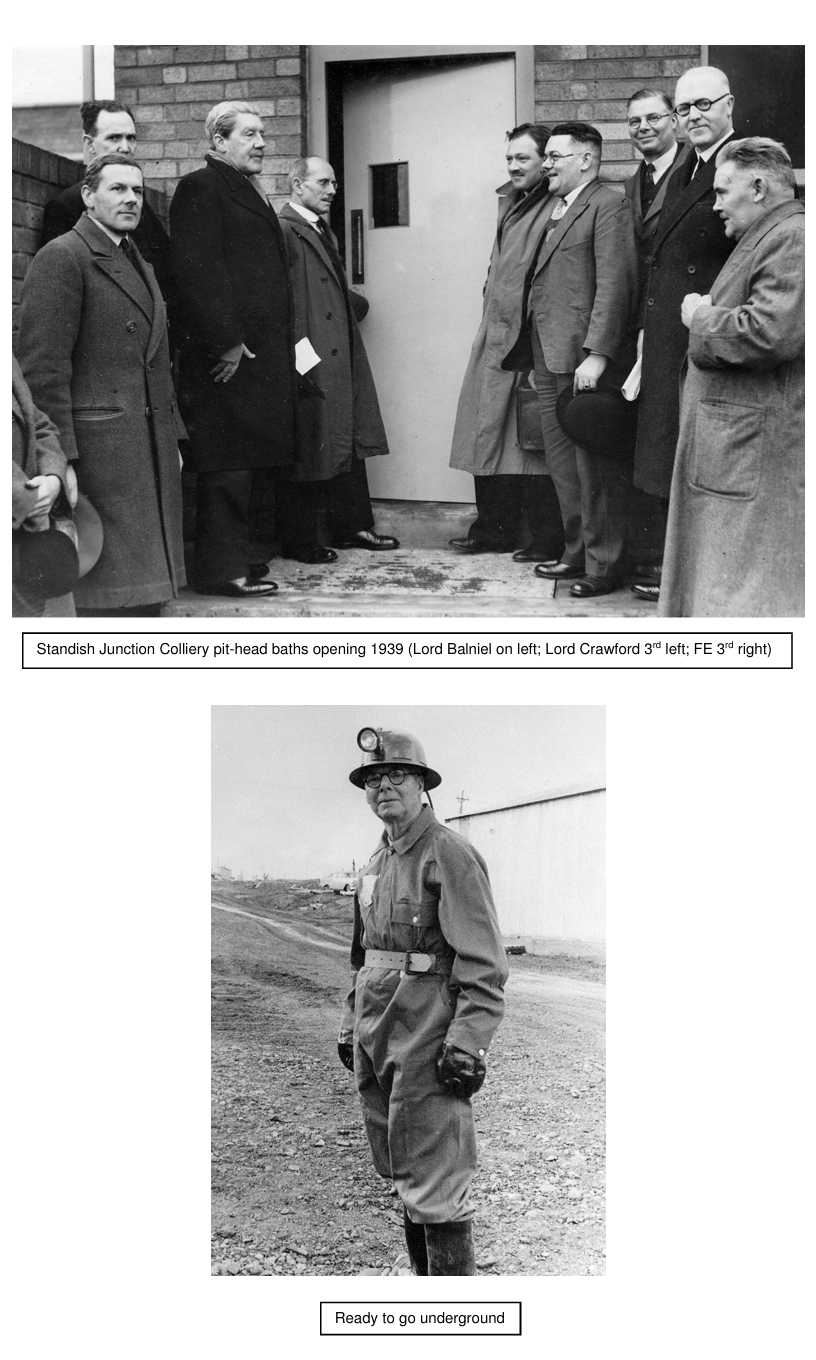
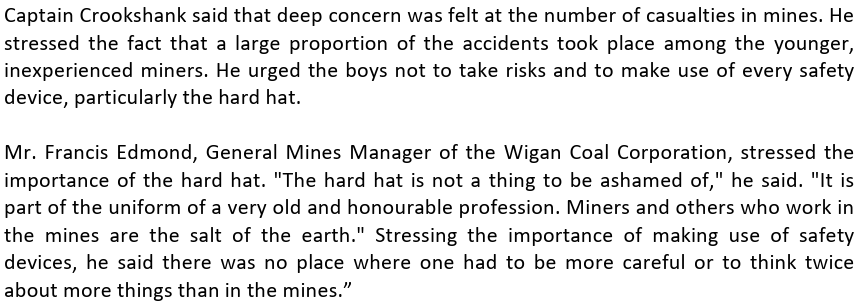
He was Chairman of the Lancashire and Cheshire Miners Permanent Relief Society; a Past President of the Lancashire & Cheshire Coal Owners Association; a member of the Coal Owners Association of Great Britain, and member of the Council and Central Committee of the Mining Association of Great Britain; Past President of the Manchester Geological & Mining Society; Past President of the Institution of Mining Engineers (4 years during the 2nd War); a member of the Board of Management of the Lancashire & Cheshire Miners Convalescent Home, and Chairman of the Lancashire and North Wales Miners Rehabilitation Committee.
In 1949, Frank was invited to attend the 4th Empire Mining & Metallurgical Congresses in the UK, then later the 5th & 6th in Australia & New Zealand (1953), and Canada (1957) respectively.
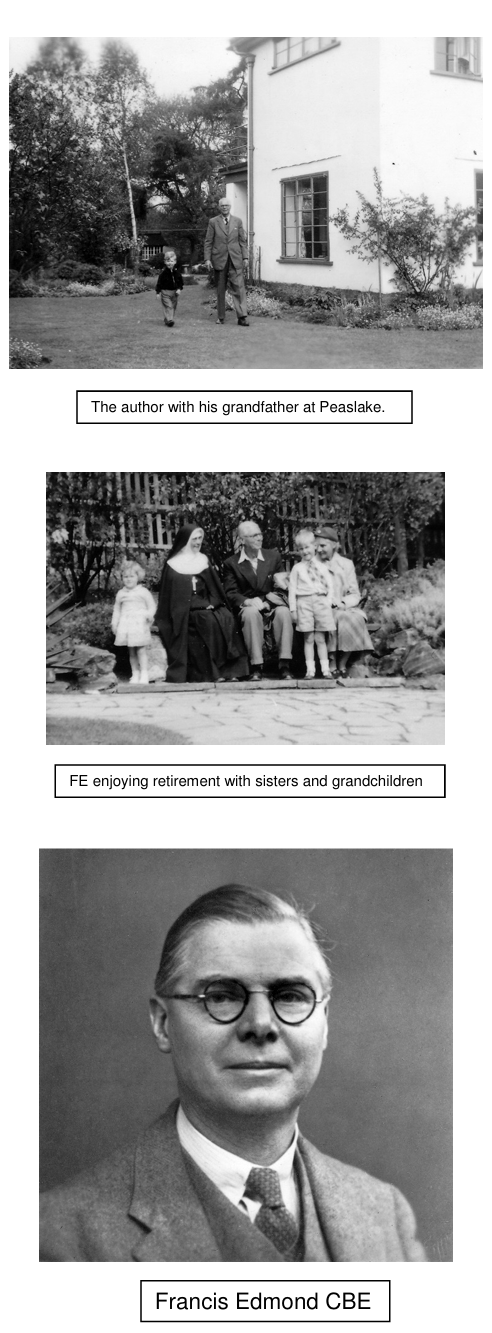
A strong churchman all his life, Frank had been Rector’s Warden at Standish Parish Church for about 30 years before retiring to Surrey in 1952, a choice of location based on the mistaken belief that his elder daughter would be moving down to her husband’s home in Kent. Unfortunately, he was instead to begin a long career in the motor transport industry following an appointment based in Stockport in 1951. A gift of artefacts, documents and school magazines made to Worksop College, when he was clearing his Standish home, led to the formation of the School Archives, housed in the appropriately re-named Edmond Room.
Frank was to live out his final years with his younger daughter near Peaslake, where he died, aged 84, on 22nd June 1966.
From the obituaries written following his death it seems clear to the author that he was well respected, and even, by some, well loved, in the industry he served so well over many years. I was able to appreciate this personally, when, in 1971, I went to my local NCB regional office in West Yorkshire for an interview to join as a mining surveyor. The interview had been arranged for me by one of my grandfather’s former associates, and several senior managers were present, and many remembered and spoke warmly of him, and were interested in meeting “Frank Edmond’s grandson”. Sadly it was a job I failed to get due to my eyesight not being up to a suitable standard for working underground.
It was also suggested in follow up letters to his obituary that Frank was directly, or indirectly, responsible for two major developments in the UK coal industry – firstly, the automated hydraulic roof support systems that became standard usage, and secondly the development of the Nottinghamshire coalfield, following his exploratory work around Manton.
He claimed that the best training he ever received for colliery management was managing the boys of the whole school at Worksop College, where he was head prefect. His claim was that the best way of getting the best out of people was by treating them as human beings. Having spent his life with both lords and labourers, he was well known for being able to comfortably converse with all-comers on any subject.
John Webb, November 2016
Thanks also to Stephen Wainwright.