Ida H. Anderton: A Wigan Artist with a famous sibling.
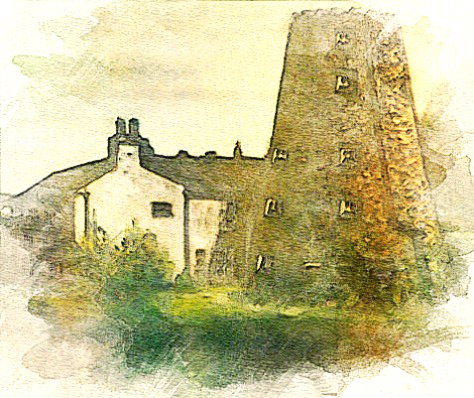
Ida Hannah Anderton was a Wigan-born painter whose work deserves to be better known. Although she lived in the shadow of her celebrated elder brother, Theodore Major, she developed her own quieter artistic voice, concentrating particularly upon flowers and the familiar landscapes and buildings of the Wigan district.
Two of her paintings, Roses and Parbold Mill, are preserved in the collection of Wigan Arts and Heritage Service. Other works remain in private hands and occasionally appear at auction. Together, they reveal an accomplished local artist who continued painting into the final decade of her life.
Early life in Wigan
Ida was born Ida Hannah Major in Wigan in 1910, one of the seven children of Stephen and Mary Major. She was baptised at St Catharine’s Church, Scholes, on 18 September 1910. At that time the family lived at 22 Lorne Street and her father was employed as a power-loom overlooker.
The Major family belonged firmly to Wigan’s working-class, textile-producing community. Both of Ida’s parents were associated with the cotton industry. Her father was also deeply religious and became a lay reader or lay preacher.
Ida’s elder brother, Theodore Major, had been born in Wigan in 1908. He went on to become one of the town’s most important twentieth-century artists, remembered for his dark industrial landscapes, portraits of working people and later paintings concerned with war, pollution and human suffering.
Growing up in the same household, Ida and Theodore would have experienced the same Wigan: a town of collieries, cotton mills, foundries, terraced streets and smoking chimneys, but also one surrounded by the softer countryside of Douglas Valley, Parbold, Appley Bridge and the Lancashire plain.
Marriage and life on Gidlow Lane.
On 2 August 1937 Ida married William Gaskell Anderton at St Andrew’s Church, Wigan. The marriage register describes William as a 24-year-old milk salesman living at 298 Gidlow Lane.
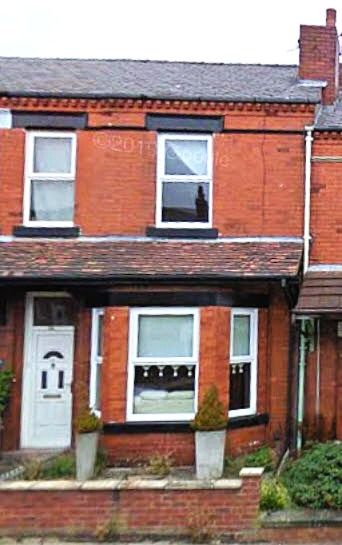
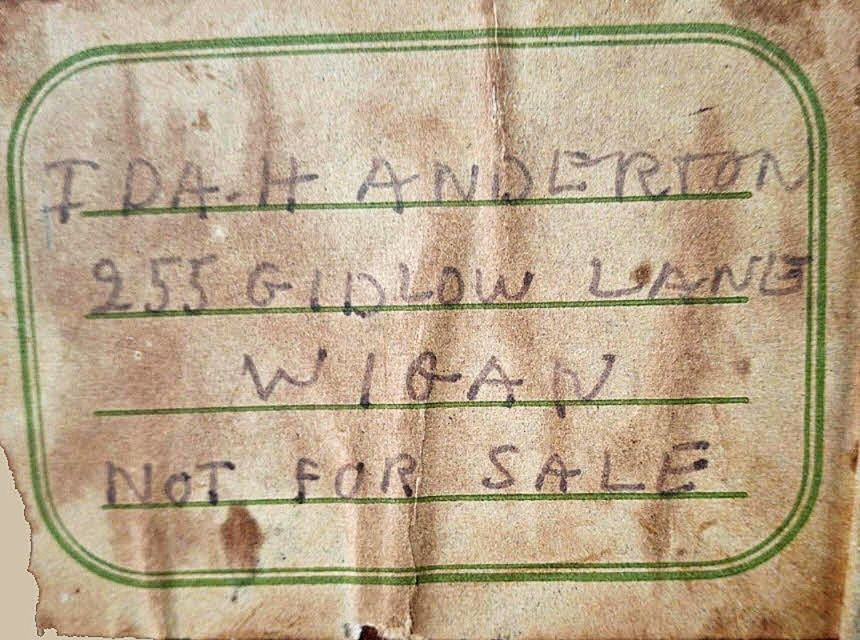
255, Gidlow Lane
Ida, aged 26, was living nearby at 255 Gidlow Lane and working as a grocer’s assistant.
William was the son of Thomas Anderton, an insurance agent, while Ida’s father Stephen was recorded as a lay reader. The witnesses were Anna Jackson Major—almost certainly Ida’s sister—and Thomas Anderton.
By the time of the 1939 Register, Ida and William were living together at 298 Gidlow Lane. This places her firmly within the Beech Hill and Springfield side of Wigan during the years immediately before the Second World War.
The surviving records do not yet provide a full account of her employment, artistic education or the date at which she began to paint seriously. At the time of her marriage she was still described as a shop worker rather than an artist. It is therefore possible that painting was initially pursued privately, alongside employment and domestic responsibilities.
Ida and Theodore Major
Ida’s relationship to Theodore Major is important, but she should not be regarded simply as “Theodore Major’s sister”. Auction catalogues consistently identify the relationship, suggesting that it remained part of the later history and provenance of her paintings. A floral still life sold in 2014 was specifically catalogued as the work of “Ida Hannah Anderton, sister of Theodore Major”
Whether Theodore formally taught Ida has not yet been established. He attended Wigan School of Art between 1927 and 1932 and taught there, principally in evening classes, between about 1930 and 1950. He also helped establish Wigan Arts Club in 1952. It is consequently quite possible that Ida’s development was encouraged by the artistic circle surrounding her brother, although documentary proof of her attendance at the school or club has yet to be found.
The surviving works suggest that brother and sister followed markedly different paths. Theodore painted Wigan as a place of emotional and industrial struggle. His figures, factories and darkened skies were intended to challenge the viewer. Ida’s paintings appear more intimate and observational. Her subjects included flowers, still lifes and recognisable local scenes.
That contrast should not be interpreted as a difference in ability or seriousness. Women artists of Ida’s generation frequently worked away from the public art world, with fewer opportunities to exhibit, teach or build a professional reputation. Their paintings were often kept within families and described as a domestic accomplishment rather than a substantial body of artistic work.
Parbold Mill
One of Ida’s most historically valuable surviving paintings is Parbold Mill. Now held by Wigan Arts and Heritage Service, the work depicts the old mill beside the Leeds and Liverpool Canal at Parbold.
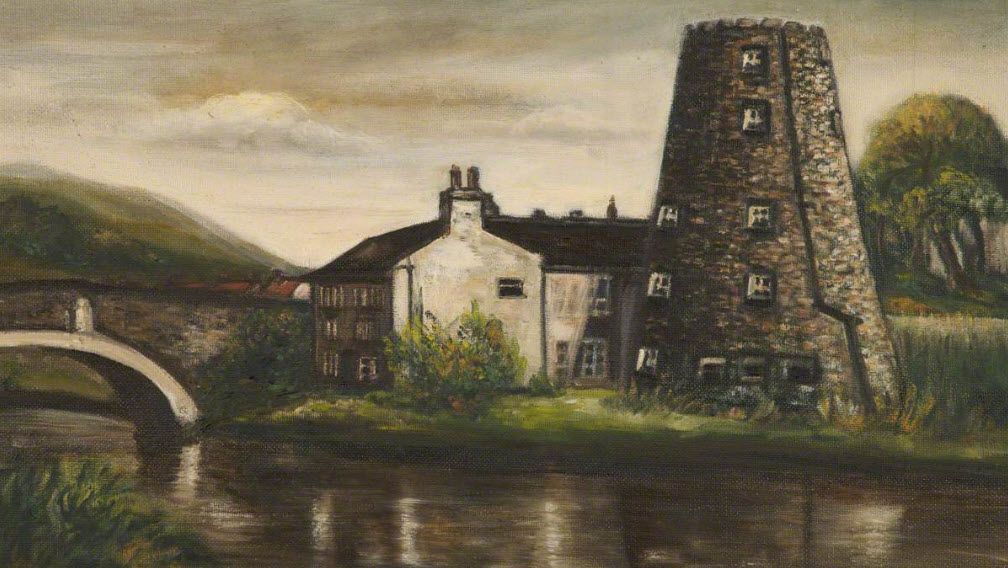
The mill was a distinctive feature of the Douglas Valley landscape. In choosing it as a subject, Ida recorded an element of the district’s industrial heritage while placing it within its rural and waterside setting. It is the kind of scene familiar to generations travelling between Wigan and West Lancashire: industry standing beside canal, field, road and village.
Parbold Mill also connects Ida’s art with the landscape around Appley Bridge, where Theodore and his wife Kathleen later lived. Yet Ida’s treatment appears to have been more topographical than Theodore’s. The painting is valuable not only as a work of art but as a record of how an important local landmark once appeared.
Its inclusion in Wigan’s public collection confirms that Ida was recognised locally as an artist whose work merited preservation.
Flowers and still-life painting.
Floral subjects appear to have formed a significant part of Ida’s output. Her publicly owned painting Roses is complemented by several floral works that have appeared on the commercial art market.
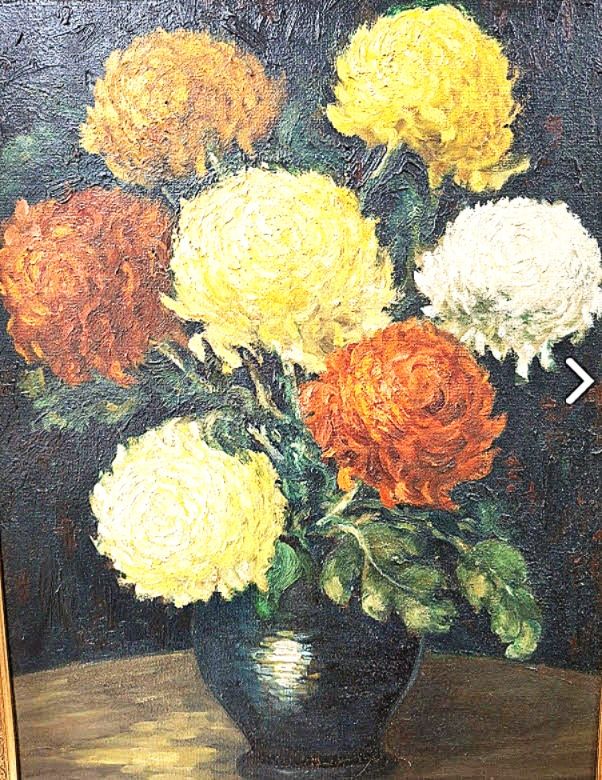
One oil-on-board floral still life, signed and dated April 1980, measured approximately 44.5 by 35 centimetres. It sold at auction in September 2014 for £220. Another floral still life, dated January 1983, has also appeared at auction, together with a work entitled Poppies in a Vase.
These dated works are particularly important because they show that Ida was still actively painting in her seventies, only a few years before her death. They also suggest that floral painting was not an occasional exercise but a subject to which she repeatedly returned.
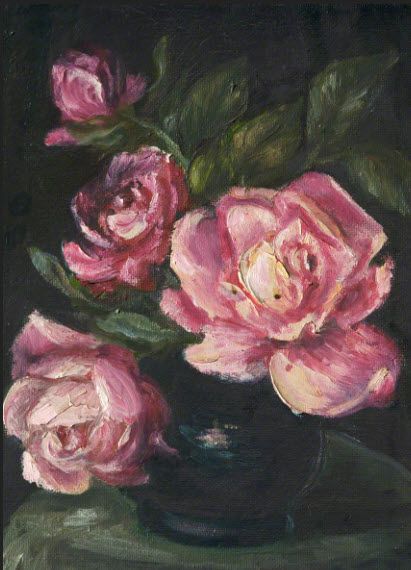
Flowers offered an artist opportunities to explore colour, shape, light and texture without the formal expectations attached to portraiture or grand landscape painting. In Ida’s hands, the flower painting may also have represented a deliberately personal response to the darker industrial art for which her brother became known.
A modest public reputation.
There is presently no evidence that Ida sought a national reputation. Her surviving public profile is modest: two paintings in Wigan’s collection and a small number of works identified through auction records.
Yet this may give a misleading impression of her total output. Paintings by local artists commonly passed directly to relatives, friends and neighbours. They were displayed in homes rather than galleries and could remain unrecorded for decades. Works signed simply “Ida Anderton” may still survive around Wigan without their owners knowing much about the artist.
Her auction history demonstrates that there remains interest in her work. Reported sale prices have been relatively modest, but financial value is only one measure of importance. Paintings such as Parbold Mill possess a particular value to the history of Wigan because they combine personal artistic expression with a record of a changing local landscape.
Death and legacy
Ida Hannah Anderton died in 1988, aged about 77 or 78. She had continued painting until at least 1983 and possibly later.Her death preceded that of Theodore Major by eleven years. Theodore’s reputation continued to grow, supported by exhibitions, television programmes, critical writing and comparisons with L. S. Lowry. Ida’s work, by contrast, largely disappeared from public view.
Ida Hannah Anderton should be recognised as a Wigan artist in her own right: a painter rooted in the town’s working-class community, connected to one of its most important artistic families and committed to recording both natural beauty and the changing local landscape.
An appeal to local residents could prove particularly valuable. Somewhere in Wigan and the surrounding district, further landscapes and flower paintings bearing Ida Anderton’s signature may still hang unnoticed upon family walls.
Her known work is small in number, but it is enough to recover a distinctive local voice—one that deserves to be brought out of her brother’s shadow and returned to its proper place in Wigan’s artistic history.