Henry Gibson (1856–1916): The Engineer Who Helped Build Victorian Wigan
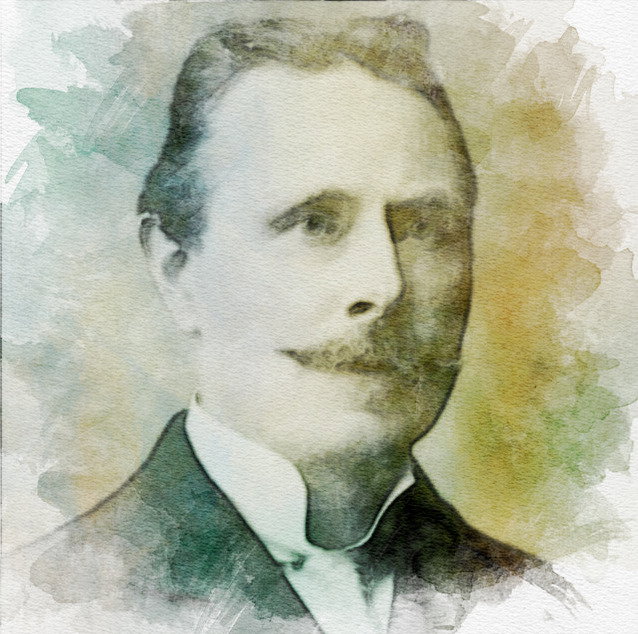
Architectural assistant, civil engineer, surveyor and community leader — the remarkable life of a man whose work helped shape Wigan and its surrounding districts.
When Henry Gibson died in 1916, Wigan lost a man whose professional life had been closely connected with the development of the borough for almost half a century.
An architect, civil engineer and surveyor, Gibson had been involved in some of the town's most important public building and infrastructure projects.
Yet, unlike his celebrated employer George Heaton, his name has largely disappeared from Wigan's architectural history.
His life provides a fascinating account of a man who combined a demanding professional career with an extraordinary commitment to his community, his church and even the early allotment movement.
From Chapel Lane to the Architect's Office
Born in Chapel Lane, Wigan, in 1856, Henry Gibson received a good education that encouraged his natural artistic and practical abilities.
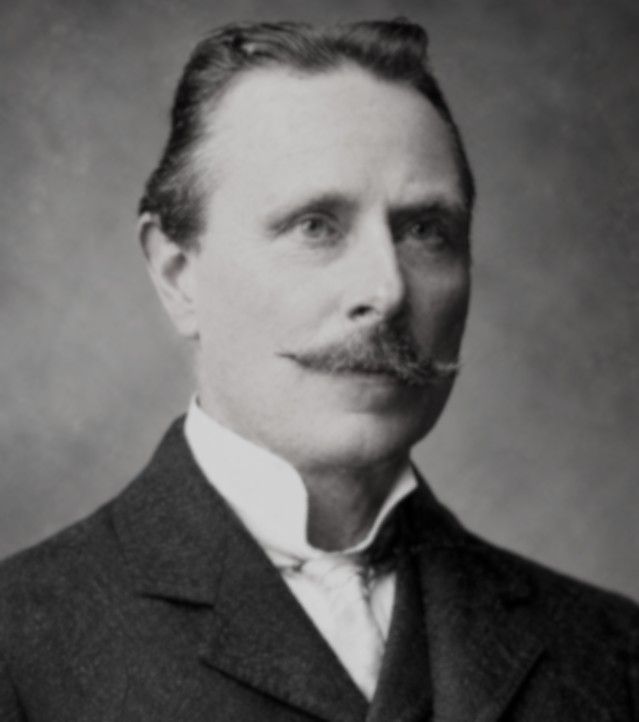
He developed interests in architecture, engineering and horticulture, pursuits that would remain important throughout his life.
His professional career began when he became the first pupil of George Heaton, one of Wigan's most accomplished Victorian architects and civil engineers.
Heaton, born in Pemberton in 1840, established a practice that would eventually become Heaton, Ralph and Heaton, responsible for numerous important buildings throughout Wigan and the surrounding districts.
Gibson's early association with Heaton was particularly significant. As the firm's first pupil, he gained practical experience during a period when Wigan was undergoing considerable transformation. Industrial prosperity, population growth and improvements in public health were creating a demand for new buildings, roads, water supplies and municipal facilities.
The practice would eventually become responsible for many of Wigan's most recognisable buildings, including Makinson Arcade, the Victoria Hotel, the Raven Hotel and numerous commercial properties in the town centre.
Although Gibson's precise contribution to each of the firm's later commissions remains uncertain, his apprenticeship placed him at the centre of an architectural and engineering business that helped transform Victorian Wigan.
Building the Modern Town
Among the important projects with which Gibson was directly associated were the construction of Wigan Market Hall and the Corporation Public Baths.
Both represented substantial improvements to the town's public facilities and reflected the increasing ambitions of Wigan Corporation during the Victorian period.
His experience was not confined to buildings. Gibson also worked on the reconstruction of Pemberton Waterworks, an important element of the area's developing water infrastructure, and undertakings connected with Billinge Union Infirmary.
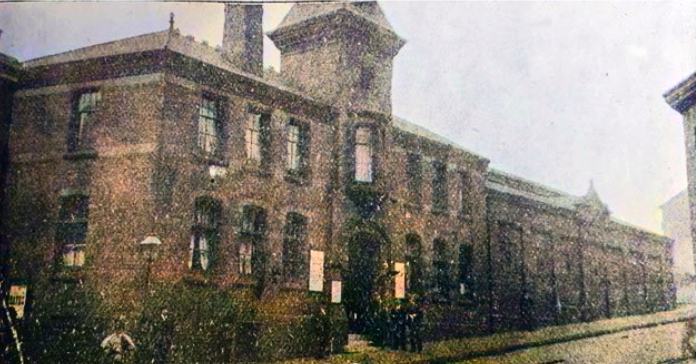 Wigan Public Baths
The Infirmary formed part of the wider provision of medical and welfare services for the district's growing population.
He was also involved in railway engineering projects for which Heaton's firm undertook surveying work in different parts of the country.
These responsibilities demanded considerable technical knowledge. Surveying was essential to the planning and construction of railways, roads, waterworks and industrial developments, and men such as Gibson played a vital role in ensuring that ambitious schemes could be translated into practical engineering works.
His career illustrates how closely architecture and civil engineering were connected during the nineteenth century, particularly in industrial towns such as Wigan.
Working for Wigan's Urban Districts
As Wigan expanded, neighbouring townships were experiencing similar pressures for improvement. New housing, factories, collieries and transport connections required the development of local government services, and Heaton's practice became closely associated with the work of several Urban District Councils.
Through this connection, Gibson acquired extensive experience of municipal engineering and the practical problems facing developing communities.
Following George Heaton's death in October 1910 and the subsequent dissolution of the partnership, Gibson entered private practice.
He later accepted an official appointment under A. T. Swain, engineer and surveyor to Ince Urban District Council.
His work brought him into close contact with the administration and development of Ince, where the demands of industry and housing placed considerable responsibilities upon the local authority.
Gibson remained in this position until shortly before his death, when failing health obliged him to relinquish his duties.
His career had therefore encompassed the final decades of Victorian industrial expansion and the increasing professionalisation of municipal engineering during the Edwardian period.
A Family Home in Whelley
Away from his professional responsibilities, Gibson was a family man whose home was in Whelley, a district with which he maintained a long and affectionate association, having lived at 86, 126 and 152 Whelley throughout his married life.
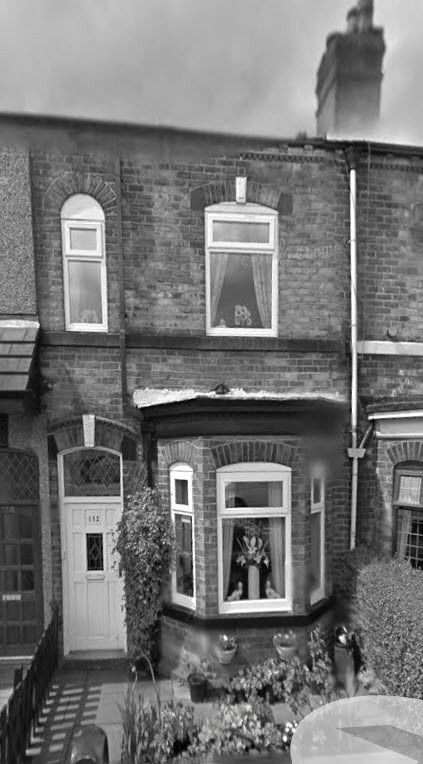 152, Whelley
He would have three daughters, Ann b 1872, Hannah b 1875, Florence b 1884 and a son, Sheldon b 1873 who followed his father's profession.
Contemporary descriptions of Gibson emphasised his devotion to his family. He was remembered as an exemplary husband and father, whose death left a considerable void among those closest to him.
A Dedicated Churchman and Public Servant
Gibson's interests extended well beyond architecture and engineering.
A committed churchman, he was closely associated with St Stephen's Church, Whelley, where he served as a sidesman and school manager.
 St. Stephen's Church
These responsibilities placed him at the centre of the district's religious and educational life, reflecting the important role played by local churches in Victorian communities.
He also took a considerable interest in politics, becoming an enthusiastic worker for the Conservative cause in Wigan's Lindsay Ward and the New Springs district.
He served as vice-president of the New Springs Conservative Club and was widely respected for his commitment to local affairs.
Despite repeated invitations to stand for municipal office, Gibson declined to become a councillor.
His life nevertheless observed that few men had worked harder for the welfare of others in local political and municipal affairs. He evidently preferred practical service to public recognition, devoting his time to the causes and organisations he supported without seeking elected office.
An Early Champion of Allotment Gardening
Perhaps the most unexpected aspect of Gibson's life was his enthusiasm for horticulture. Long before allotment gardening became an established feature of many working-class communities, Gibson was among the first to cultivate a plot on the boundary between New Springs and Wigan.
His interest was more than a casual pastime.
Henry could frequently be found working on his allotment between four and five o'clock in the morning, making the most of the hours before beginning his professional duties.
He approached gardening with the same determination and enthusiasm that characterised his engineering work.
His activities brought him into contact with the local horticultural community, and he became associated with the New Springs Horticultural Society.
The society's representatives were among those who attended his funeral, demonstrating the affection and respect he had earned through this very different aspect of his life.
At a time when industrial Wigan was dominated by collieries, mills, foundries and workshops, Gibson's enthusiasm for cultivating the land provides an interesting contrast to his professional occupation.
The Death of a Respected Wigan GentlemanHenry Gibson died in 1916 agerd 60, following a period of declining health.
His funeral took place at Wigan Cemetery, with the service conducted by the Reverend R. O. Shone of St Stephen's Church, Whelley.
The attendance reflected the breadth of his interests and the high regard in which he was held.
Among the mourners were representatives of Wigan's civic and professional communities, including Alderman A. Higham, Councillor W. Wallden and A. T. Swain, the engineer and surveyor under whom Gibson had served at Ince Urban District Council.
Members of the council's engineering and administrative staff were also present, together with representatives of the New Springs Conservative Club and the local horticultural community.
His former architectural connections were remembered through a wreath from Messrs G. Heaton and Sons.
The funeral arrangements were undertaken by Middleton and Wood.
The tributes described Gibson as a genial and engaging gentleman, a man of considerable personal pride and punctuality who had earned the friendship and respect of a wide circle of acquaintances.
Remembering Henry Gibson
The story of Henry Gibson offers an important reminder that the buildings and infrastructure of Victorian Wigan were not simply the achievements of a handful of celebrated architects.
Behind the familiar names were skilled assistants, surveyors and engineers, contributions were essential to the successful completion of major projects.
Gibson's association with Wigan Market Hall, the Public Baths, Pemberton Waterworks and Billinge Union Infirmary places him among those professionals who helped provide the physical foundations of the modern borough.
His connection with George Heaton is particularly noteworthy.In June 2025, Wigan Council unveiled a blue plaque in Market Place recognising Heaton's contribution to the town's architectural heritage, following a nomination by Wigan Building Preservation Trust.
The recognition provides a timely opportunity to explore the careers of other individuals associated with his influential practice.
Henry Gibson is one such figure.
Sources:
Wigan Building Preservation Trust - George Heaton research
Wigan Observer
Wigan Examiner
findmypast
Census