The Shock of Secondary School.
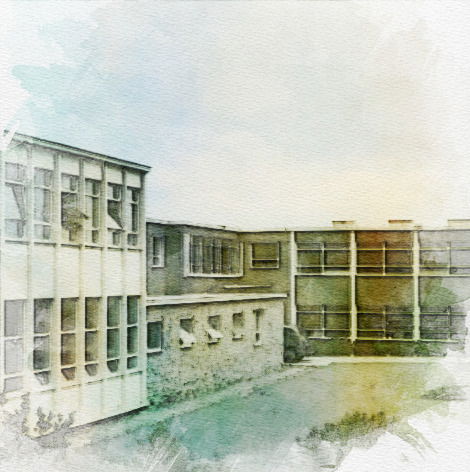
(A five-minute chat changed my life)
My life, and my classmates’ lives, were about to change forever. We were going to start ‘big school’. On an August morning in 1955 — it was raining hard, I remember — I set off from home in a very nervous state after attending St Patrick's School for five years and for weeks had been listening to horror stories about what awaited you at secondary school. Tar and feathering was one of the horrors that abounded — to make it more convincing, shavings from woodwork instead of feathers. Is it any wonder we were less than happy at the prospect of our new lives? The following year, with a year under our belts, I imagine we would tell the same horror stories to the newbies — not very nice, but that's how it's been since time immemorial, like telling ghost stories.
St Patrick's, along with many primary schools at that time, had little in the way of facilities. As an example, it was an all-boys school; the toilets were in the playground. Whilst the lavatory closets were undercover, the urinals were open to the elements; consequently, a trip to the toilet in wet weather would result in a soaking — unbelievable in these days. Obviously, there was no heating, so often in winter burst pipes were a common occurrence. Mixed classes didn’t arrive until two years after I left for St John Fisher Secondary Modern School.
For all its shortcomings, as far as facilities were concerned, I was reasonably happy, although I was to struggle for the rest of my school life — and beyond — with poor spelling (I’m thankful on a daily basis for spellcheck). Miss Egan, the headteacher, was a wonderful teacher — kind and encouraging. I lament that, at that time, being Headmistress, she didn’t teach in the classroom; I think I may have done a little better with her approach.
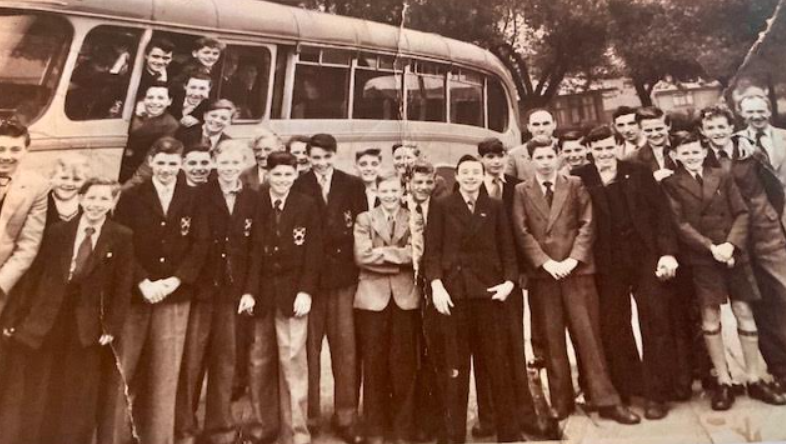
On my first day at secondary school, the first thing I noticed was being called by my surname after six years at primary school by my first name. However, when everything is different — with new classmates from other schools, a gymnasium, science labs, a different teacher for every subject, not to mention bus journeys to and fro — it is a lot to take in. The change in the form of address, from ‘Thomas’ to ‘Walsh’, seemed to magnify how changed my school life would be for the next four years. These are seemingly unimportant observations in the scheme of things; nevertheless, to a child of eleven years, they appear frightening, almost insurmountable.
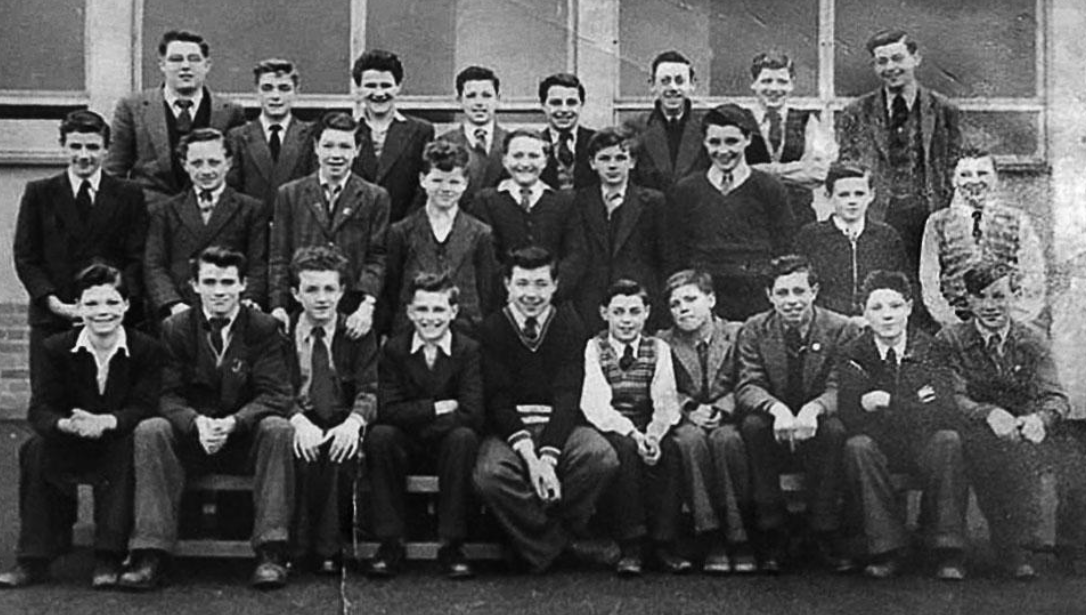
John Fisher Class - 1955
I recall that on the first day, the new intake used the main entrance; ever afterwards, you used the back door, so to speak, off the playground. It sticks in my mind that in the entrance hall, facing you on your first day, was a wall with green and white tiles in a geometrical pattern — the first time I had seen tiles used almost as an art form.
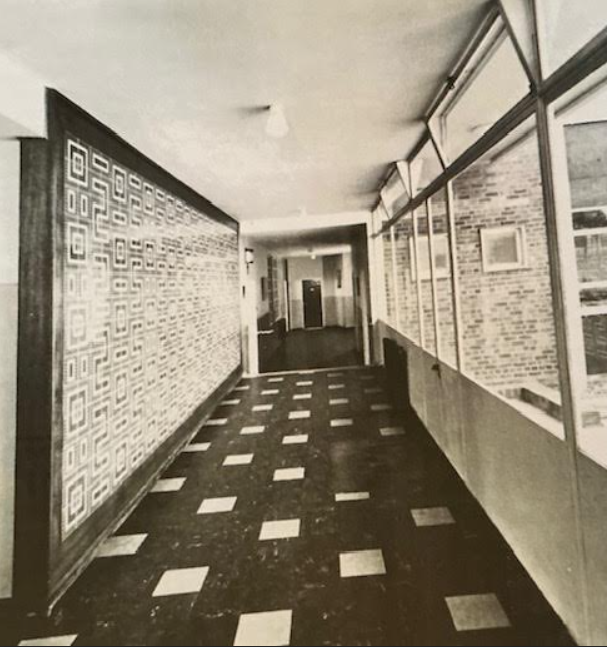
My only encounter with tiles before were the six or seven white tiles used as a splashback around our white sink at home. These days, everyone calls them ‘Belfast sinks’, if you don’t mind. I can assure you that the vast majority of residents of Scholes wanted rid of them and replaced them with a modern ‘sink unit’ — you really had made it, especially if you had an ‘all-night burner’ as well!
Talking about ‘Belfast sinks’ being the new must-have — ‘The Emperor’s New Clothes’! I can’t help but think about Wigan comedian Harry Pemberton’s joke: “When you got up in the morning in Scholes and your Mam gave you a jam butty, we didn’t realise we were having ‘continental breakfast’!” “A rose by any other name would still smell as sweet.” I’m sorry — I know I’m overusing metaphors; I have it in my mind it makes me sound more intelligent than I am!
Which brings me to spelling. This problem was to become more apparent at ‘big school’ and made the following four years the unhappiest of my life. Being a poor speller in those unenlightened days — at least as far as education was concerned — consigned you to being regarded as a ‘dunce’. If you know your teachers consider you thus, your confidence ebbs away as surely as the sea ebbs from the shore. Thora Hird once said, “When I went to school there was no such thing as dyslexia — you were sat at the back with raffia.” This rings so true; this happened to me in one class.
Not wishing to sound boastful, I could write quite a reasonable composition (at least I thought so). Having tried my very best many times to write an essay, after marking, the book would be returned with a sea of red ink pointing out spelling mistakes — not a mention of content. I lost heart and, regret to say, eventually stopped trying.
I only heard this maxim a long time after leaving school: “Being clever isn’t knowing everything; it’s knowing where to find the answer for everything.” It was a eureka moment when I first heard it. I only wish I’d heard it in my schooldays. I think it would be a wonderful idea to highlight this ‘pearl of wisdom’ (there I go with metaphors again) in every classroom, particularly in secondary schools.
The only time I got my ‘mojo’ back was in my last year. On my first day in that final year, Mr Lawson, considered the strictest teacher in the school, called me to his desk. He gave me a good talking-to. He started, “You’re no Einstein — we know that — but you can do so much better. Instead of being the class clown, try at every subject. I’ve read some of your essays and they’re very good.” This was the first time in my entire school life I had received praise and encouragement. He went on to say how important this last year at school is: “Your last school report is the one you’ll take to interviews.” For the first time in my secondary school life, he motivated me to try. Whilst he couldn’t make me into a good speller (not even Einstein himself could do that), poor spelling is something I have had to cope with all my life.
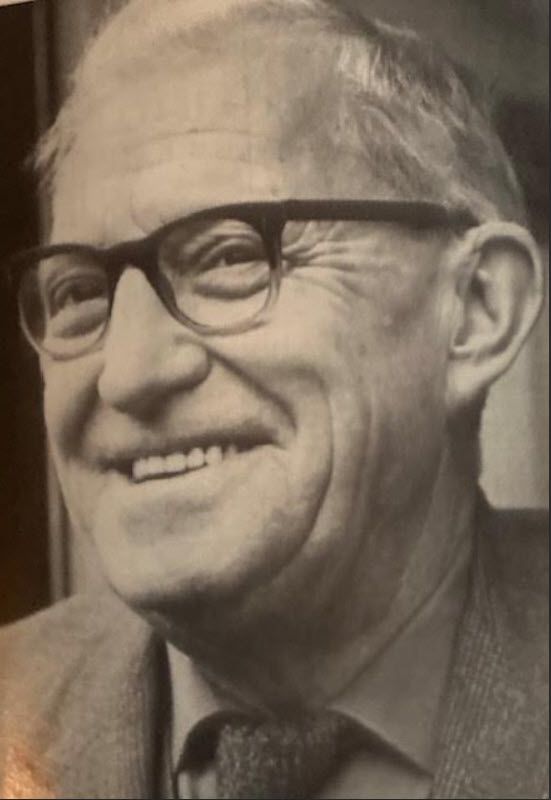
Mr. Lawson
I took Mr Lawson’s advice to heart and, in my last year, tried to the best of my ability in every subject. My final exam results were very much improved, finishing second in class, albeit in B stream. My final report, given on my last day at school, was in a sealed envelope with instructions not to open it but to give it to your parents. I must confess, I — along with the vast majority of pupils — opened the envelope as soon as we got on the bus. I was pleased, to say the least; it was by far the best results I ever had. So much so that when I gave it to my Mam she wondered if I’d brought the wrong report home!
I was aware at interview that Mr Lowe, my future employer, took quite some time to read the report. I’m sure Mr Lawson’s urging played no little part in my getting an apprenticeship at Lowes Department Store — a surprise to many of my teachers and, truth to tell, myself.
I unfortunately never saw Mr Lawson again after my schooldays. I regret very much not seeking him out to thank him for his encouragement and for having faith in me when other teachers had given up.
In those times — as I said, unenlightened days — pupils were not encouraged to ask questions; on the contrary, you were made to seem to be a nuisance if you did. Consequently, I myself — and I’m sure many others — pretended to understand what was being taught. Today teaching is a million miles from my days as a scholar. I see the difference in my role as a school governor; I see at first hand the time and effort today’s teachers put in — encouraging questions, working tirelessly to help if a pupil is struggling. How strange is it not, that when I couldn’t wait to leave school, I should now be involved in education!
Comments