Slaves without Chains
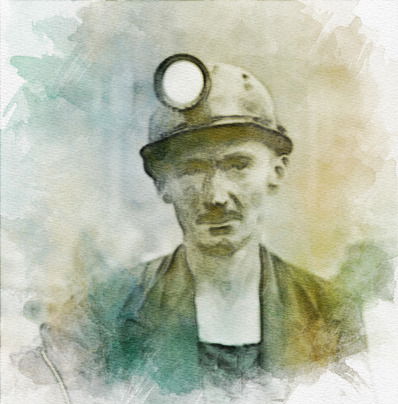
On November 12th, 2025, I was invited to the 93rd anniversary of a Golborne Mining Disaster in which 27 men died. I wrote a poem which I was asked to read as part of the very moving remembrance led by Rev Trevor Hodson, who gave a very moving and eloquent sermon of that horrendous day.

Eric Foster, who has worked tirelessly along with his committee, including Derek Doherty and Steve Naylor, who have done so much to keep the memory of the Golborne Mine Disaster on the 18th March 1979, when 10 men died, is marked every year to ensure the men who died will never be forgotten.
They campaigned successfully to have a memorial placed in Golborne centre and a beautiful stained glass window in St Thomas Church.
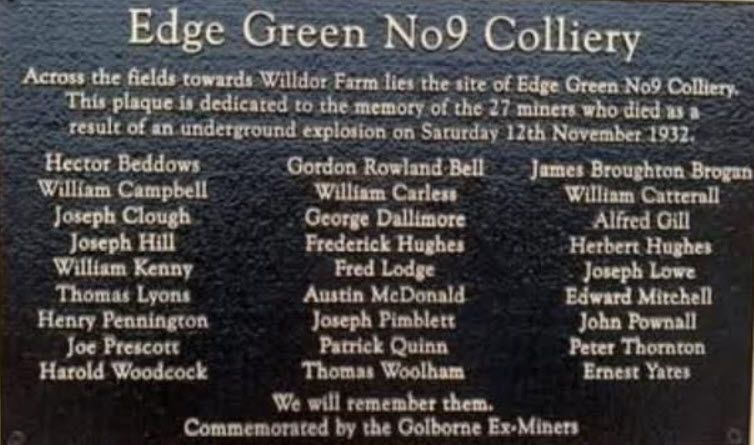
Eric Foster, Derek Doherty, Steve Naylor and the members Golborne Ex Miners had always thought that the Edge Green Number 9 explosion should be marked too, and so they set about raising funds and in under these committed men the plans came to fruition with a plaque bearing the names of all the men was unveiled by The Mayor of Wigan Councillor Jenny Bullen, the plaque is placed on the exterior of The Harrow Inn Ashton in Makerfield .
There was a great attendance, including the grandchildren of some of the men who died. One in particular, John Mitchell Wilson, whose Grandad perished at the age of 54, brought a small leather purse with 2 half crowns, which were recovered from his grandfather's body. John said the coins were something he and his late mother, Alice, have always treasured, as John said some things are priceless.

Edward Mitchell and his three children

The leather purse and coins.
The 27 men killed that day the eldest was John Lowe age 64 the youngest Hector Beddows aged just 16.
The poem I read -
" 27 Brave Men "
On the evening of November 11th in the year of our Lord 1932. 27 men were never to see their loved ones again, never again to hear the sound of their children playing; denied simple joys that makes life worth living. At 2 am the following day the ground itself seemed to weep with sorrow.
These brave men paid a terrible price for coal, so that the wheels of industry would keep on turning. As they descended into the earth on that night, without so much as a murmur. Did they think of their mothers on that fatal day as lifeblood ebbed away, did they have time to make their peace with God?
Did some have sweethearts waiting? Did they have dreams and hopes now never to be fulfilled! Did they ponder of growing old with kith and kin? Of having grandchildren at the knee, telling stories which will never now be told.
Alas, we who are left must tell the story for them; their voices silenced on that horrendous day will resound through the years. Hence, decades after their voices fell silent. We use our voices to tell their story, to remember them on this anniversary day!

Miner's wives anxiously await news
The day set me off down 'Memory Lane' (a lane I seem to visit more and more as I get older) back in my childhood in Scholes where almost every house had at least one working or retired miner. In my street of the eleven houses all but one had someone employed in the mines and one house had four, one retired and 3 sons employed.
My Dad worked in the mines and was hurt in a fall. In 1929, my maternal grandfather lost a leg in an accident and was awarded the princely sum of 5 shillings a week to keep 11 children. My Grandmother took in washing to help make ends meet. harsh times, you wonder how they managed,but somehow they did.
Like all children in mining areas you would often be woken by the clatter of clogs on the flagstones or cobblestones, or about half an hour before the cavalry charge, the sound of the 'knocker up' who would knock on the window until she got a reply. Mrs Wynn did the honours on our particular street, the charge was a shilling a week which she would collect Friday evening.
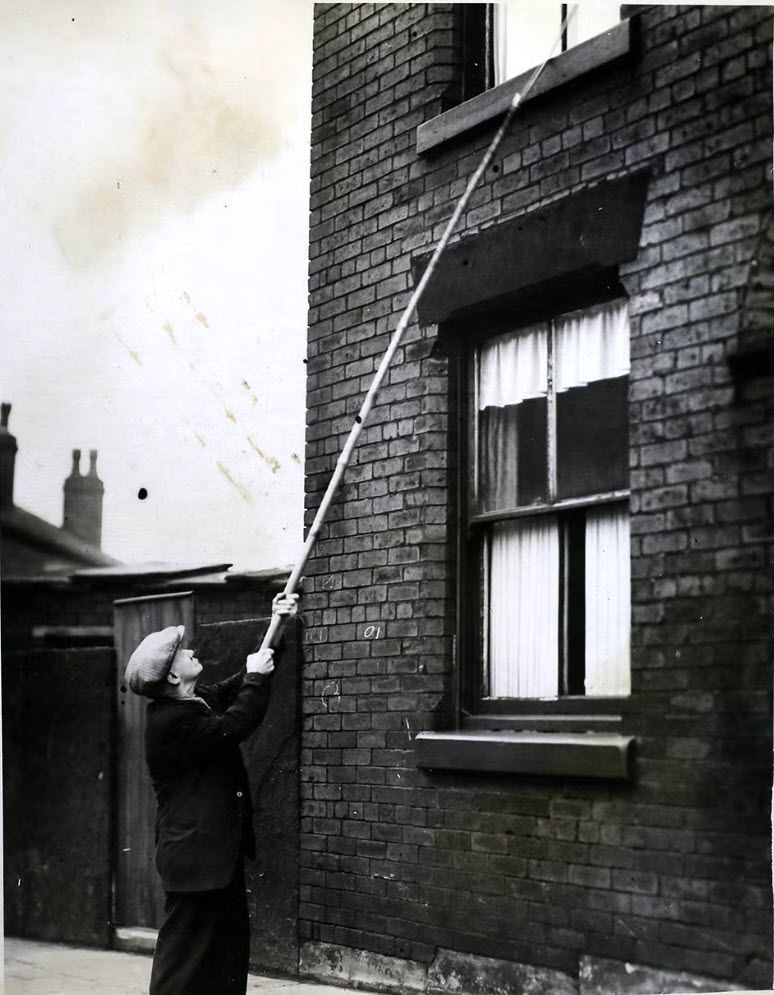
Knocker Upper
I remember people saying that two adjoining houses in another street had a plan, to save money the men were so careful one allowed his neighbour to pay Mrs Wynn to do her job, he would knock on the wall to awaken his colleague, resulting in them paying 6d each, I can't swear to the truth of that story maybe it was an urban myth but I heard it more than once.
Conditions in mines were brutal, and before nationalisation, they were inhumane. After they were taken into public ownership, things improved greatly, albeit slowly, although the disaster in Golborne proved that dangers were ever-present.
In the book 'A Road to Wigan Pier', a work I abhor with every fibre of my being, because of its unfairness to Wigan in general and in particular Scholes and Wallgate, at least that's my opinion !" These areas provided thousands upon thousands of miners who helped, in no little way to power this country's wealth, a wealth they had little share in. I know that many say miners and face workers in particular often got better rates of pay than other manual workers; if they did, they deserved every penny. Surely no one with an ounce of humanity would begrudge them one iota. I must, however, give George Orwell credit for the segment of the book that deals with miners' conditions. These words highlighted the appalling price paid for coal, a price few give the chance would be prepared to pay. I say, given the chance, this was a chance not available to many in mining areas. Having taken up the pick, so to speak, the camaraderie, esteem for each other and their communities, these sentiments were self-evident; witnessed by the fight and courage shown in the, alas, unsuccessful attempt to save the mines.
Lord Derby visited the Colliery Offices at Bryn on the Sunday following the explosion and expressed his sympathy, and he conveyed a message of sympathy from the King which read :-
“The Queen and I are much distressed to hear of the disaster at the Garswood Hall Colliery and the serious loss of life involved. Please convey to the deceased relatives our heartfelt sympathy and make inquiries on our behalf on the progress of the injured. George RI.”
An uncle used to say of himself and other miners, " We Were Slaves Without Chains" and even more emotively, "There's blood on coal, and it's not that of the mine owners". I know these sentiments are raw, and I'm sure difficult to read as they were to write, but it is surely right and proper that hardships and dangers miners faced every day of their working lives should be remembered and recorded so that future generations realise what 'Standing On The Shoulders of Giants' really means.
Following on the previous paragraph, we must also remember the countless thousands of men who died from lung disease in their own beds. The long-term diseases suffered by coal miners, such as pneumoconiosis, also known as 'Black Lung Disease' and others like silicosis and emphysema These conditions were eventually completely debilitating. In the past, many mine owners would shirk responsibility, refusing to accept that coal dust was the culprit.
As a child, I saw many sufferers of 'Black Lung Disease' walking from one window sill to the next and pretending to look around. The truth was, they were unable to walk another step until they got some lung function back. These conditions denied men years of life and condemned them to years of suffering. Their distress and anguish, along with those who paid the ultimate price, must never be forgotten.
To this end, I was fortunate to be a member of a very committed group of people ably led by Sheila Ramsdale, and with great support from The Wigan Observer, we campaigned unrelentingly to have a mining monument in Wigan.

Mining Memorial
After many years of hard work fundraising, and with the help of a very generous anonymous donor, our dream became a reality with the unveiling of a bronze memorial depicting a miner, a pit brow lass and a child labourer, which is situated between Wigan Town Hall and the swimming baths. If readers haven't yet seen the sculpture, its well worth a visit.
Tom Walsh