Life in Wigan in 1957
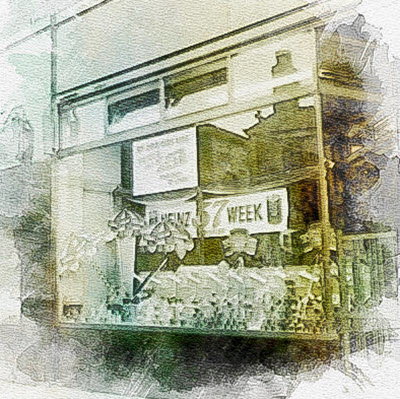
Michael Nelson explores a 1957 Wigan Council publication on local services, offering a fascinating insight into everyday life in the borough at the time.
A town of work, community and changing times
In 1957, Wigan remained unmistakably an industrial town. Engineering, manufacturing and the remnants of the coal and cotton industry continued to shape its economy, its landscape and the rhythm of everyday life. Yet the town was also changing. New housing estates were growing, public services were expanding, and buses, trains and organised leisure were giving people opportunities that earlier generations could scarcely have imagined.
A contemporary guide to Wigan’s services and amenities provides a fascinating snapshot of this period. Its pages reveal not only the institutions of the town but also how people worked, travelled, shopped, worshipped and spent their leisure time.
A compact industrial borough
The County Borough of Wigan covered 5,083 acres and had a recorded population of 84,546 at the 1951 census. It was a compact and densely settled place, with the town centre serving surrounding communities including Pemberton, Newtown, Beech Hill, Whelley, Poolstock, Highfield and Goose Green.
Industry was never far away. The National Coal Board maintained its area office at Kirkless, New Springs, while the Lancashire and Cheshire Miners’ Permanent Relief Society had offices in Hope Street. The Cotton Employers’ Association occupied Tower Buildings, and the Ministry of Fuel and Power maintained a local office in King Street.
These organisations reflected the industries on which countless Wigan families depended. Coal mining remained one of the district’s defining occupations. Mines, railway sidings, factory chimneys, warehouses and engineering works dominated much of the landscape, and the working day was often regulated by colliery winding times, factory shifts and railway timetables.
The Employment Exchange in Dorning Street and the Youth Employment Bureau in Hope Street were important destinations for those looking for work. For young people, leaving school frequently meant entering a mine, mill, factory, shop, office or apprenticeship. The Mining and Technical College in Library Street offered another route, providing the technical education needed by the town’s industries.
Housing and the expanding town
Wigan in 1957 was a mixture of Victorian streets and developing post-war estates. Many residents still lived in tightly packed terraced houses built during the great expansion of the coal and cotton industries. These were communities in which neighbours knew one another, children played in the street and local shops, churches, clubs and public houses formed the centre of social life.
At the same time, the Corporation was engaged in improving housing conditions and constructing new homes. Applications for council housing were made through the Borough Treasurer at the Town Hall, while the Borough Engineer’s department was responsible for building and repairs.
The listing of Pemberton County School on the Norley Hall Estate points to the growth of new residential districts on the outskirts of the older town. Estates such as Norley Hall represented a fresh beginning for many families, offering more space and modern facilities away from crowded inner-town streets.
There were still 22 acres of Corporation allotments. These allowed residents to grow vegetables, fruit and flowers and remained especially valuable to families accustomed to the thrift and self-sufficiency of the wartime and immediate post-war years.
Shopping in the town centre
The traditional centre of Wigan life was its market. Friday was the official market day, although the Market Hall and surrounding streets attracted shoppers throughout the week.
The town centre contained a combination of independent traders, specialist shops and increasingly prominent national chains. British Home Stores stood in Standishgate, while Woolworths occupied premises at 1 Standishgate. The Wigan and District Equitable Co-operative Society was another major presence and played an important part in the lives of working families.
Shopping was a more personal experience than it is today. Grocers, butchers, fruiterers and market traders served regular customers, often weighing and wrapping goods at the counter. The weekly shop might involve several stops rather than a single visit to a supermarket. Market traders and small shops competed with the growing chain stores, while the Co-operative Society attracted customers through its familiar dividend system.
Wednesday was Wigan’s early-closing day, when many shops closed for the afternoon. Banks observed Saturday closing. These shared trading patterns gave the town centre a weekly rhythm which was understood by shopkeepers and customers alike.
Cafés and eating out
Wigan possessed a surprisingly extensive selection of cafés, snack bars and restaurants. Among those listed in 1957 were the Comforteria Café in Market Place, Café Makinson in Wallgate, the Minorca Grill Room, the Market Arcade Café and Vose’s Café in Market Street.
Green and Cook operated the Don Café and Vesta Café in Hope Street, as well as premises in Standishgate. C. Raffo ran Lewis’s snack bars at several locations, including Darlington Street, Greenough Street, King Street, Station Road and Wallgate. Restaurants were also operated at Wallgate and Haigh Hall.
The list suggests a busy town centre serving shoppers, office employees, industrial workers and travellers. Cafés offered somewhere to meet friends, enjoy tea and a meal, or simply take a break during a shopping trip. Woolworths, British Home Stores and the Co-operative Society also provided refreshments, making them important social as well as commercial destinations.
For special occasions there was the licensed Victoria Hotel in Wallgate. The Grand Hotel in Dorning Street was unlicensed by this period, but remained one of the town’s established buildings.
A town of cinemas
Cinema-going was one of Wigan’s most popular forms of entertainment. In 1957 residents could choose from an extraordinary number of picture houses:
- County Playhouse, King Street
- Court Cinema, King Street
- Empire Cinema, Market Place
- Pavilion Cinema, Library Street
- Palace Cinema, King Street
- Prince’s Cinema, Wallgate
- Ritz Cinema, Station Road
- Gidlow Picture House, Gidlow Lane
- Scholes Picture House
- Queens Cinema, Ormskirk Road
- Carlton Cinema, Ormskirk Road
A visit to the pictures was affordable entertainment for couples, families and groups of friends. Programmes commonly included a main feature, a supporting film and a newsreel. Children attended Saturday matinees, while queues outside the most popular cinemas became a familiar sight when a major film arrived.
Television was beginning to change evening entertainment, particularly following the introduction of commercial television in the Granada region in 1956. Nevertheless, the cinema still occupied a central place in Wigan’s social life. The concentration of cinemas around King Street, Market Place and Wallgate made the town centre especially lively in the evenings.
Live entertainment was also available. The Hippodrome in King Street presented variety, plays and musical comedy, while Wigan Little Theatre operated in Crompton Street.
Dancing and courtship
For many young adults, the dance hall was as important as the cinema. The Baths Assembly Hall in Millgate, the Court Hall in King Street, the Empress Hall in Station Road and the Palais de Danse in Millgate all offered opportunities for music, dancing and courtship.
Wigan also supported several dancing schools, including Gee’s School of Dancing in King Street West, Moss’s School of Dancing in Market Square and Churchill’s School of Dancing in King Street.
An evening’s dancing provided a welcome release after a week in the mine, mill, factory, shop or office. Dance halls were places to meet friends and, for many couples, where lifelong relationships began.
Sport and outdoor recreation
Sport was woven deeply into Wigan life. Rugby league occupied a special place, with Wigan Rugby League Football Club playing at Central Park. The ground was more than a sporting venue: on match days it became a gathering place for the whole town.
Wigan Athletic played association football at Springfield Park, while local football leagues, works teams, school teams and Sunday-school competitions gave residents many opportunities to take part rather than simply watch.
Cricket was played at Bull Hey on Parsons Walk, and the town supported clubs for swimming, hockey, badminton, tennis, table tennis, athletics, cycling, rowing and golf. Greyhound racing was available at Poolstock and Woodhouse Lane, while Haydock Park provided horse racing within easy travelling distance.
Millgate Baths opened in both winter and summer seasons and also served as the home of Wigan Swimming Club. For many children, the public baths were where they first learned to swim.
Mesnes Park was the town’s principal public recreation ground, offering nine hard tennis courts, three bowling greens, a putting green, children’s playground and café. Bowling greens could also be found at Alexandra Park and Great Acre. Haigh Plantations offered space for walking and family outings, while boating was available through Wigan Rowing Club at Basin Lane.
Getting around
Public transport was essential to everyday life. Car ownership was growing, but it was far from universal. Most journeys were still made on foot, by bicycle, bus or train.
Corporation buses operated from the Market Place, while Ribble and Lancashire United connected Wigan with the wider region. Through services ran to Chorley, Blackburn, Bolton, Preston, Ormskirk, Southport, St Helens, Liverpool, Leigh, Manchester, Warrington and Blackpool. Longer-distance coaches travelled to North Wales and London.
Wigan had three passenger railway stations. North Western station provided main-line services towards London, Glasgow, the West Country and Wales. Wallgate station served Bolton, Manchester, Southport and Liverpool, while Station Road station handled local services between Wigan, St Helens and Manchester.
The directory’s description of several railway goods yards—at Chapel Lane, Darlington Street East and North Western station—also demonstrates how important rail remained to Wigan’s industrial economy.
Education and opportunity
The town maintained an extensive network of primary and secondary schools. These included church schools, county schools, grammar schools, secondary moderns and the Thomas Linacre Secondary Technical School in Parsons Walk.
Wigan Grammar School stood at Mesnes Park Terrace, while the Girls’ High School and Notre Dame High School were in Standishgate. For most children, however, the system was determined by the eleven-plus examination. A grammar-school place could lead towards university or a professional career, while secondary modern and technical education prepared many pupils for employment and apprenticeships.
School meals were produced at kitchens in Pemberton, Whelley, Poolstock, Newtown and other districts.
The Youth Employment Bureau helped school-leavers enter the workplace, illustrating how closely education was connected to Wigan’s industrial and commercial needs.
Health and welfare
The creation of the National Health Service in 1948 had transformed access to medical treatment, but local government continued to provide numerous health and welfare services.
The Royal Albert Edward Infirmary on Wigan Lane was the town’s principal hospital. Other establishments included Billinge Maternity and General Hospital, Whelley Isolation Hospital and Pemberton Tuberculosis Sanatorium.
Municipal clinics in Millgate provided dental treatment, tuberculosis services and maternity and child welfare. Welfare foods were distributed from Hewlett Street, and the town maintained an old people’s hostel at Douglas Bank House.
Some of the language used in the 1957 directory—including separate entries for “blind persons” and the “deaf and dumb”—belongs firmly to its period. Nevertheless, organisations such as the Wigan, Leigh and District Workshops for the Blind and the institute in Swinley Road represented an organised attempt to provide employment, assistance and companionship.
Faith and community
Religion remained highly visible in 1957 Wigan. The directory records a remarkable number of Anglican, Roman Catholic, Methodist, Congregational, Baptist and Independent Methodist churches, alongside the Salvation Army, Quakers, Spiritualists, Christian Scientists and other denominations.
For many residents, a church or chapel provided far more than Sunday worship. It might support a Sunday school, youth club, choir, sports team, women’s group or dramatic society. The Queen’s Hall Mission, Standishgate Methodist Church and the town’s numerous parish churches were important centres of social activity.
Organisations such as the Scouts, Girl Guides, Boys’ Brigade, Church Lads’ Brigade, St John Ambulance, Women’s Voluntary Services and the YWCA gave people structured opportunities for service, recreation and friendship.
The town also supported choral, orchestral, photographic, operatic and dramatic societies, a French Circle, a film society and even a Flying Saucer Group based near Abbey Lakes. This unusual entry is a delightful reminder of the fascination with space and unexplained aerial phenomena during the early years of the Space Age.
News and communication
Local newspapers were central to community life. The Wigan Examiner appeared on Tuesdays and Fridays, while the Wigan Observer was published on Tuesdays and Saturdays. Wigan editions of Manchester newspapers and the Lancashire Evening Post also circulated in the town.
The General Post Office in Wallgate handled letters, telegrams and telephone services. Telephone numbers were short by modern standards, but many households still did not possess a private telephone. Urgent calls might be made from a public call box, a neighbour’s house or a nearby business.
The directory lists telephone numbers for virtually every public service, yet the normal way to deal with many matters was still to visit an office in person. The Town Hall, Municipal Buildings, Market Hall and government offices around King Street, Library Street and Wallgate formed the administrative heart of the borough.
A town between two eras
Life in Wigan in 1957 combined long-established traditions with the beginnings of profound change. Coal and heavy industry still supported the town, rugby league drew crowds to Central Park, Friday remained market day and churches and working men’s organisations continued to bind communities together.
At the same time, new council estates were altering the shape of the borough. Technical education promised greater opportunity, television was entering more homes and improved transport made travel beyond Wigan increasingly accessible.
Many of the places listed in the 1957 guide have since disappeared. Cinemas have closed, railway goods yards have vanished and industrial sites have been redeveloped. Others—Mesnes Park, Haigh Plantations, the Royal Albert Edward Infirmary, and some of the town’s churches and civic buildings—remain part of Wigan’s identity.
The directory captures a town that was industrious, sociable and remarkably self-contained. Almost everything a person required—from work, education and healthcare to shopping, sport and entertainment—could be found within a short bus ride or walk. It was a Wigan poised between its Victorian industrial inheritance and the social and technological transformations of the later twentieth century.
Michael Nelson 2026
Source: WIGAN 1957 - A.B.C. OF SERVICES AND AMENITIES