John Critchley Prince - Wigan’s Working-Class Poet
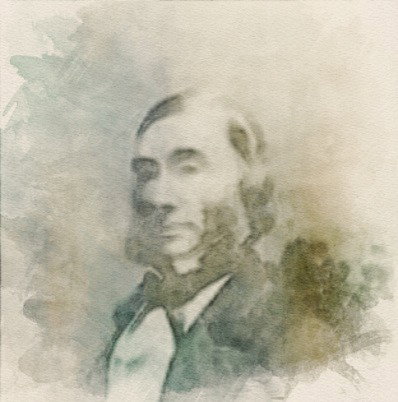
Among the many notable figures to emerge from Wigan during the nineteenth century, few better represent the determination of ordinary working people to rise above hardship than the poet John Critchley Prince. Born in Wigan on 21st June 1808, Prince became one of Lancashire’s most celebrated working-class poets, producing verses that earned admiration far beyond his native town despite a life marked by poverty, struggle and personal misfortune.
A Childhood in Wigan
Prince was the son of Joseph Prince, a reed-maker for handloom weavers. The family lived in modest circumstances and could not afford a formal education. Instead, young John received his early instruction through a Baptist Sunday School in Wigan, where he learned the basics of reading and writing. Sources indicate that this school was attached to the Baptist Chapel in Lord Street, an institution that played an important role in educating children from working-class families during a period when schooling was often beyond the reach of the poor.
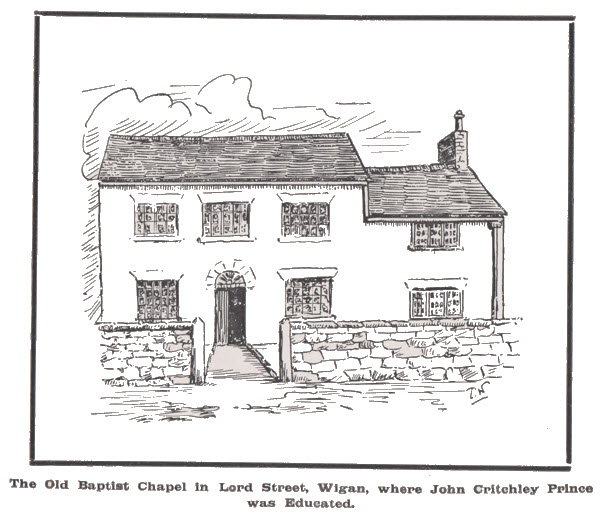
The education he received at the Lord Street Baptist Chapel was limited, but it proved invaluable. Although Prince later described his schooling as imperfect, it gave him the literacy skills that would eventually allow him to discover poetry and literature. In many ways, Wigan’s Baptist community helped lay the foundations for one of Lancashire’s most gifted poetic voices.
By the age of nine, Prince was already working alongside his father, learning the trade of reed-making. Like many Wigan children of the period, he spent long hours in labour rather than in a classroom.
Discovering Poetry
The Prince family left Wigan in the early 1820s in search of work, moving first to Manchester and later to Hyde. Yet Wigan remained central to Prince's story and identity. During his teenage years he discovered the poetry of Lord Byron, an experience that transformed his life. Inspired by Byron’s writings, Prince began composing verses of his own and developed a passion for literature that would stay with him forever.
Despite working long hours and receiving little formal education, he educated himself through reading and writing. His determination reflected the self-improving spirit that characterised many Lancashire workers of the Industrial Revolution.
Hardship and Perseverance
Prince’s life was far from easy. In 1830 he travelled to France seeking employment, but political upheaval and economic difficulties thwarted his plans. After a difficult journey home, he discovered that his wife and children had fallen into poverty and were living in the Wigan Workhouse. The experience left a deep impression on him and influenced some of his later writings.
Throughout his life, he struggled to earn a stable income, working intermittently as a reed-maker and factory operative while continuing to write poetry. Yet his literary reputation steadily grew.
Literary Success
Prince's breakthrough came in 1840 with the publication of Hours with the Muses. The collection proved popular and eventually went through several editions. It established him as one of Lancashire’s leading poets and brought him recognition among literary circles.
He later published several other collections, including Dreams and Realities, The Poetic Rosary, and Autumn Leaves. His poetry often focused on nature, religion, reflection and human feeling rather than political issues, and readers admired the optimism he maintained despite the hardships he endured.
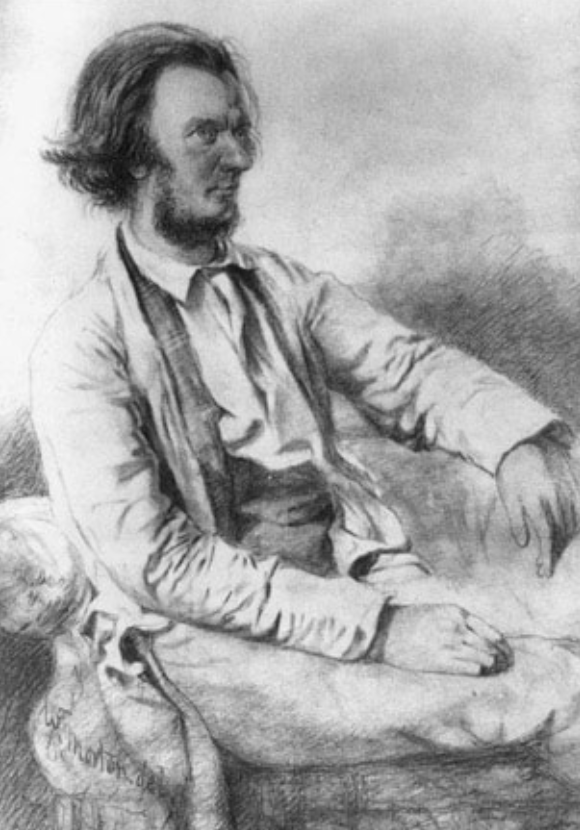 John Critchley Prince
Prince also became associated with Manchester's famous literary gatherings at the Sun Inn, helping to inspire what became known as the Sun Inn Group, an important circle of working-class writers and intellectuals.
Wigan's Literary Legacy
Although much of his adult life was spent outside the town, John Critchley Prince never lost his connection with Wigan. He was born there, received his earliest education there, and experienced some of the most formative events of his life there. The Baptist Chapel in Lord Street gave him the basic education that enabled him to read, write and eventually become a published poet.
Michael Nelson 2026
References
Sun Group
minorvictorianwrter.org.uk
Image provided by Marianne Howell
The life of John Critchley Prince - R.A Douglas Lithgow
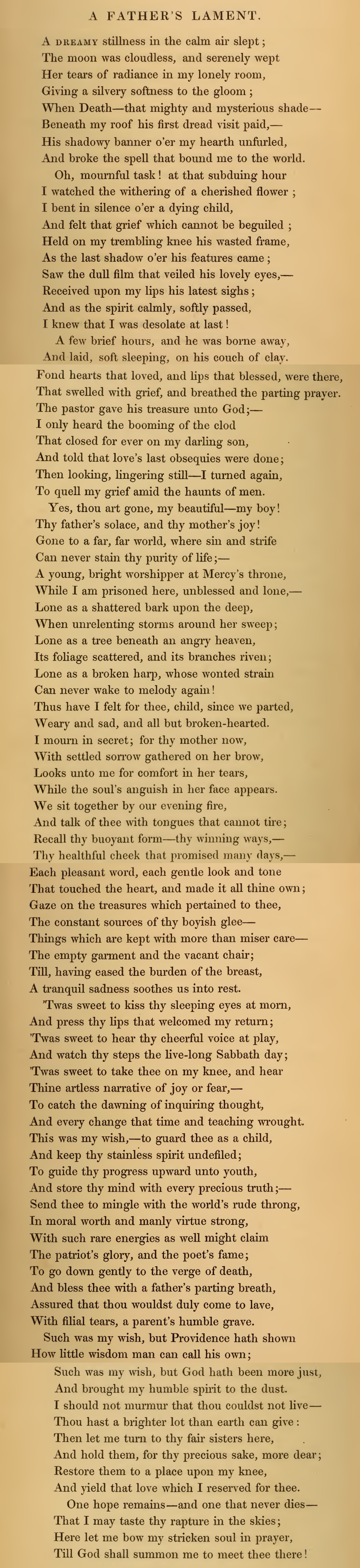
A Father's Lament
He composed this piece around 1840 to record his immense grief following the death of his young son. The family was enduring extreme poverty in Manchester at the time, and Prince had just returned from a desperate, unsuccessful journey to France to find work, only to discover his family living in the Wigan Workhouse. Shortly after moving them into a dingy garret, his son passed away
Comments