History of Wigan Cricket Club
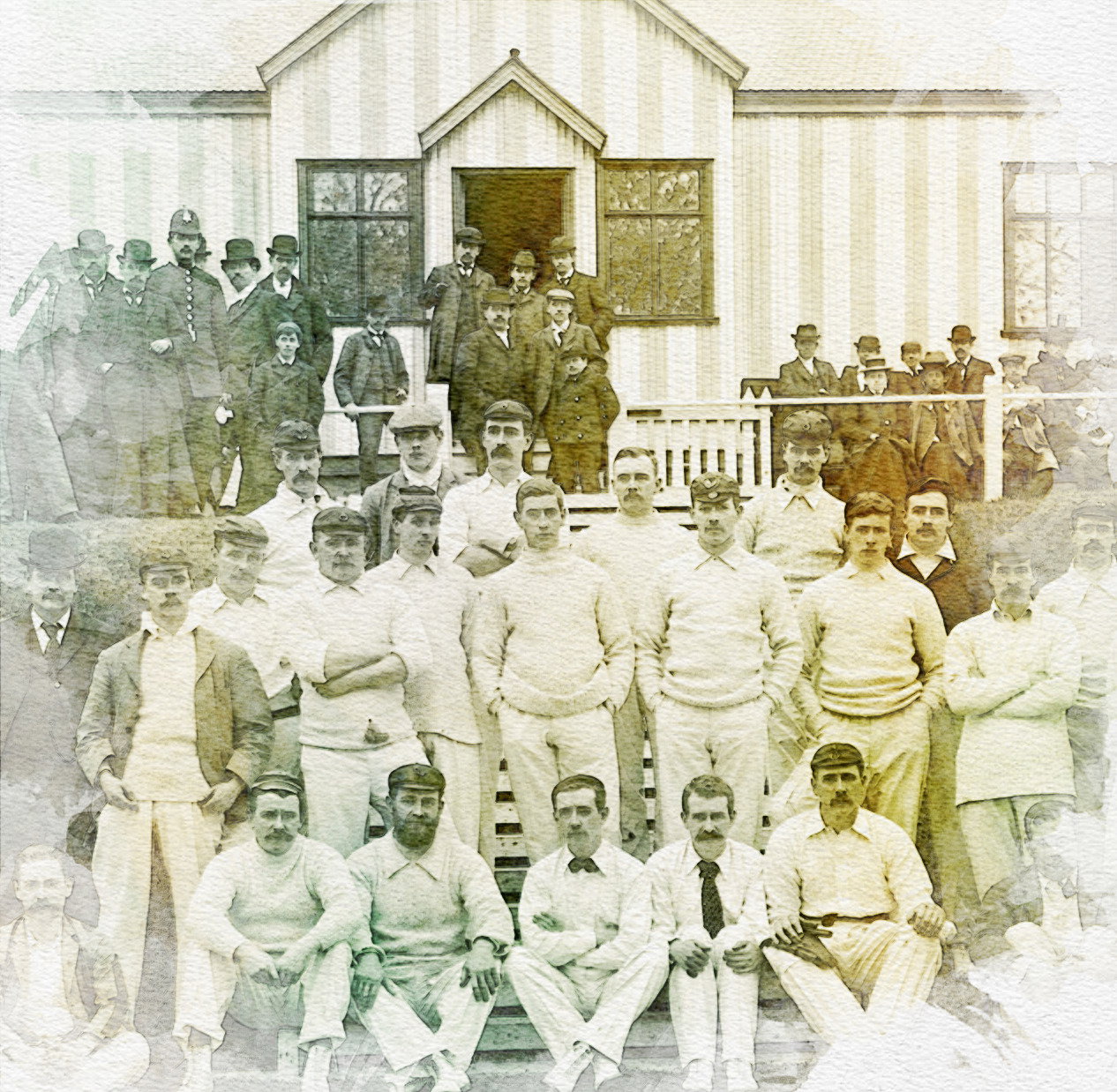
A pictorial history and presentation of the club's history is available via the Download button below.
The history of Wigan Cricket Club is much more than a story of bat and ball. Founded in 1848, the club has witnessed the transformation of Wigan from a rapidly expanding industrial town into the modern borough we know today. Its story is closely intertwined with the town's coal mines, cotton mills, railway development, civic life and some of its most influential families.
Over the years, the club has occupied several grounds, entertained distinguished cricketers, supported charitable causes and survived the pressures of industrial expansion and urban redevelopment.
The club's history also provides a fascinating insight into Victorian society, when cricket was not simply a sporting pastime but an important part of the social and business life of the town.
Cricket in Wigan before 1848
Cricket was being played in Wigan before the establishment of the present club.
One of the earliest recorded matches took place in August 1843 on Amberswood Common, where two companies of the 6th Regiment of Foot, stationed in Wigan, played a match before a considerable gathering of spectators.
The occasion was more than a sporting contest. Booths were erected, refreshments provided and the officers subsequently enjoyed dinner at the Plume of Feathers Inn.
At this time, soldiers were stationed in Wigan partly because of the industrial unrest affecting Lancashire's manufacturing and mining communities. The military barracks stood in Standishgate, on land subsequently redeveloped following the creation of Crompton Street.
The match on Amberswood Common illustrates how cricket was already becoming a popular public spectacle, even before the town possessed an established cricket club.
The foundation of Wigan Cricket Club, 1848
Wigan Cricket Club was formally established on 21 August 1848, following a conversation between two prominent townsmen.
John Mayhew had recently arrived in Wigan as solicitor to the Earl of Balcarres, while William Marsden was a gentleman's outfitter and draper whose business was situated in Marsden Place.
Marsden presided over the inaugural meeting, at which the club was established, and its first rules agreed. Within two days, a further meeting had completed the arrangements.
The club's first officers included:
- President: The Hon. Colin Lindsay, uncle of the Earl of Crawford.
- Vice-President: John Mayhew.
- Treasurer: Frederick Price, Coroner for Manchester.
- Secretary: Charles William Lightoller.
- Committee: Henry Lees, Thomas Heald, James Burrows and Henry Lamb.
The involvement of these individuals demonstrates the club's close association with Wigan's professional, commercial and civic establishment.
Victorian cricket in South Lancashire developed against a background of coal mining, cotton manufacturing and religious influence. Although working people enjoyed the game, Wigan Cricket Club was initially very much a social institution for businessmen, professionals and influential local families.
Brick Kiln Field: The first home, 1848–1853
Having formed the club, the committee's first challenge was finding somewhere to play.
An approach to the Rector of Wigan, the Reverend Sir Henry John Gunning, seeking permission to use the Mesnes was unsuccessful.
Instead, the Dicconson family of Wrightington Hall made land available at Brick Kiln Field, near the Mesnes, at an annual rent of £25.
The club's first recorded match was a contest between married and unmarried members. The wickets were pitched at noon, and play continued until five o'clock, with an interval for refreshments.
Among those attending were the Hon. Colin Lindsay and Ralph Thicknesse MP, together with a considerable number of ladies.
The married men emerged victorious, after which members retired to the Royal Hotel in Standishgate for dinner.
The occasion was reported in the Manchester Courier, providing an important contemporary record of the club's earliest activities.
An unpaid dinner bill
One episode from the club's early history emerged almost four years later.
In March 1852, the Preston Chronicle reported legal proceedings brought by Mr Whiteside, proprietor of the Royal Hotel, against George Lightoller over an unpaid bill arising from the inaugural match dinner.
The meal had cost six guineas, with a similar amount spent on refreshments at the cricket ground.
Lightoller maintained that he had paid his share, but the outstanding account remained unsettled until the matter reached court.
The incident provides a revealing glimpse of the club's social activities, and suggests that its early financial administration was not always as efficient as its cricketing organisation.
George Lightoller was a cotton spinner associated with Yarrow Bridge in Chorley. His family was related to Charles Herbert Lightoller, who would later become famous as the senior surviving officer of the Titanic disaster in 1912.
Cricket and charitable society
From its earliest years, Wigan Cricket Club played an important role in the town's charitable activities.
The club was particularly associated with fundraising for the Wigan Dispensary, established in 1798 to provide medical assistance to the town's poorer inhabitants.
In January 1850, members organised the second Wigan Dispensary Ball at the Royal Hotel.
The event attracted many of the district's leading families, including members of the Lindsay family, Lord Muncaster, Ralph Thicknesse MP and representatives of Wigan's commercial establishment.
The hotel's assembly room had been enlarged and improved for the occasion at a cost of approximately £100.
The ball was a spectacular affair, with elaborate decorations, refreshments and dancing that began at nine o'clock in the evening and continued until five the following morning.
After expenses, the event was expected to raise approximately £100 for the Dispensary.
It demonstrated the important part played by the cricket club in Victorian Wigan's social and charitable life, extending its influence far beyond the boundary of the cricket field.
The move to Ince, 1854–1860
The club's occupation of Brick Kiln Field came to an end in 1853.
The surrounding Mesnes area was extensively affected by coal mining, and the cricket ground appears to have suffered from mining-related damage.
A new ground was found in Ince, near the site now occupied by Rose Bridge Rugby Club.
During this period, the organisation became known as Wigan and Ince Cricket Club.
The move illustrates the close relationship between cricket and Wigan's industrial geography. The availability of suitable playing fields was frequently determined by landowners, mining activity and the changing use of land.
Return to the Mesnes, 1860–1873
In 1860, the club finally obtained permission to play on the Mesnes, the very land that had been denied to its founders twelve years earlier.
The new ground opened on 26 May 1860, with a nominal annual rent of just one shilling.
A contract worth £26 was accepted for preparing the playing area, and the club reverted to its original name, Wigan Cricket Club.
This period produced some of the most remarkable surviving evidence of early cricket in the town.
On 28 June 1862, Wigan played Bradford Park of Bolton on the Mesnes. A photograph of the occasion survives, accompanied by a contemporary illustration identifying players and surrounding buildings.T
he photograph may be among the earliest surviving outdoor photographs taken in Wigan.
It records not only the match but also the appearance of the surrounding neighbourhood, including Lansdowne Terrace, Scarisbrick Street Baptist Chapel and Swinley Hall.
In 1867 and 1868, a Wigan twenty-two played against an All England Eleven on the Mesnes, demonstrating the club's growing sporting reputation.
Cricket gives way to Mesnes Park
The club's occupation of the Mesnes was eventually brought to an end by one of Wigan's most important Victorian civic improvements.
The Wigan Rectory Glebe Act of 1871 enabled the sale of land, including areas required for the development of Mesnes Park.
Nathaniel Eckersley purchased sixteen acres of land for the proposed park and grammar school for £2,000, with additional land acquired from John Fowden Hodges.
The construction of Mesnes Park Terrace would cut across the existing cricket ground.
Although proposals were made to retain cricket within the new public park, they were unsuccessful.The club was again obliged to find a new home.
Frog Lane and Prescott Street, 1874–1897
The club's next home was the Frog Lane Enclosure, also known as the Prescott Street Ground.
The land belonged to the Earl of Derby and had been leased in 1870 to Lamb and Moore, proprietors of the Newtown and Meadows Collieries.
In 1874, arrangements were made with Jonathan Lamb for the cricket club to occupy land not required for mining operations. The first match at the new ground was played in 1875.
The association with the Lamb family was particularly significant, as Henry Lamb had been among the club's original committee members.
In July 1885, a separate company, Wigan Cricket Ground Limited, was established with capital of £2,000, divided into 400 shares of £5 each.I
ts shareholders included several prominent Wigan businessmen, among them Maskell William Peace, Thomas Fairhurst and members of the Wall family.
On 21 February 1888, the company purchased the Frog Lane land from the Earl of Derby for £800, subsequently granting the cricket club a long-term lease.
However, the future of the ground was already uncertain.
In September 1895, an anonymous correspondent writing to the Wigan Observer suggested that the existing ground was unsuitable because of its heavy clay soil and poor access. The writer proposed Bull Hey as an alternative location.
In 1898, Wigan Cricket Ground Limited sold the Frog Lane property to the Lancashire and Yorkshire Railway Company for £3,600.
The company was subsequently wound up, with £750 donated to the cricket club.
The transaction ended another chapter in the club's history, but provided an opportunity to establish a more permanent home.
Bull Hey: A new beginning in 1898
The move to Bull Hey in 1898 was one of the most important developments in the club's history.
The land was part of the former Wigan Rectory Glebe, situated between Mesnes Park and Wigan Hall.
The new Rector, the Reverend Roland George Matthews, agreed to lease the field to the club.
The site required considerable preparation. It sloped downwards from Mesnes Park towards Wigan Hall, making substantial levelling necessary.
The work was undertaken by Preston and Hurst under the direction of club member Alfred Shaw, at a cost of £368.
The construction of a pavilion, fencing and other facilities brought the estimated cost of establishing the new ground to approximately £1,500.
The grand opening
Bull Hey officially opened on 23 April 1898, with a match between a Wigan Fifteen and a Lancashire Eleven captained by the celebrated cricketer A. N. Hornby.
Approximately 2,000 spectators attended.
Hornby was one of the leading sporting figures of his generation, having represented England at both cricket and rugby.
The occasion was a major event in Wigan's sporting calendar and marked the beginning of a long association between the club and Bull Hey.
The Grand Naval Bazaar of 1901
The move to Bull Hey had placed considerable financial demands on the club.
Although £1,085 had been raised towards the new ground, additional funds were needed to complete the improvements.In April 1901, the club organised an ambitious four-day Grand Naval Bazaar at the Public Hall in King Street.
The event occupied all three floors of the building, with stalls, competitions, entertainments, luncheons, teas and suppers.
The organisers hoped that the famous Indian-born England batsman Prince Ranjitsinhji would officially open the bazaar, although he was ultimately unable to attend.
Nevertheless, the event proved successful, raising approximately £875.
The money helped establish Bull Hey as a substantial sporting and social venue.
Wigan Cricket Club and the birth of Lancashire County Cricket Club
One of the club's most important contributions to cricket history came in 1864.
On 12 January of that year, representatives of thirteen Lancashire cricket clubs gathered at the Queen's Hotel in Manchester to establish Lancashire County Cricket Club.
Wigan was among the clubs represented, with Thomas Wall junior and S. H. Swire attending on its behalf.
The meeting marked the formation of one of England's most important county cricket institutions.
Wigan Cricket Club can therefore claim a place among the founding clubs of Lancashire County Cricket Club.
The origins of Wigan Rugby Football Club
Perhaps the most remarkable sporting connection is the part played by Wigan Cricket Club in the foundation of Wigan Rugby Football Club.
At the cricket club's annual dinner, held at the Dicconson Arms in Standishgate on 13 November 1872, members discussed the possibility of forming a football team to provide recreation during the winter months.
A further meeting was arranged at the Royal Hotel on 21 November 1872.
A committee was appointed, including Thomas Ratcliffe Ellis, R. V. Kyrke, George Sowter, Henry Wall and other cricket club members.
Nathaniel Eckersley, recently re-elected Mayor of Wigan, agreed to provide financial support.
The new football club played its early matches at Folly Field, which had originally formed part of Brick Kiln Field.
Its first captain was R. V. Kyrke.
The club subsequently moved to the Prescott Street cricket ground in 1885, before eventually establishing its own home at Central Park.
Thus, the origins of one of rugby league's most famous clubs can be traced directly to the social gatherings and organisational activities of Wigan Cricket Club.
The Wall family and Wigan's sporting heritage
Few families played a more influential role in the club's history than the Walls.
Thomas Wall, born in Staffordshire in 1815, arrived in Wigan in 1838 and played in the cricket club's first match in 1848.
In 1853, he founded the Wigan Observer, becoming an important figure in the town's newspaper industry and civic life.
His five sons, Thomas, John, Charles, Henry and William, all became associated with Wigan Cricket Club.
Several also played rugby for Wigan.
Thomas Wall junior represented Wigan at the meeting which established Lancashire County Cricket Club in 1864.
Charles Wall served as honorary secretary of Wigan Cricket Club for many years and played an important part in organising the 1901 Naval Bazaar.
Henry Wall captained Wigan Cricket Club and was also involved in Wigan Cricket Ground Limited.
The family's involvement extended into local government, journalism, law, engineering and charitable organisations.
Their story illustrates how closely Victorian sport was connected with the professional and commercial life of Wigan.
Distinguished members and remarkable connections
Over its long history, Wigan Cricket Club has been associated with a number of individuals who achieved distinction far beyond the cricket field.
Sir John Scott, born in Standishgate in 1841, was an early juvenile member of the club. A talented fast left-arm bowler, he represented Oxford University against Cambridge at Lord's in 1863. He subsequently pursued a distinguished legal career in Egypt, was granted the Freedom of Wigan in 1893 and received a knighthood in 1894.
Sir Walter Parratt, organist at Wigan Parish Church between 1868 and 1872, was another member. He later became Master of the Queen's Musick and subsequently served King Edward VII and King George V.
Sir Thomas Ratcliffe-Ellis, a prominent Wigan solicitor, provided legal assistance to the club and served as secretary of Wigan Cricket Ground Limited. He was knighted in 1911.
Sir Ian McKellen, the internationally celebrated actor, also has a connection with the club. As a youngster living in Parsons Walk, overlooking Bull Hey, he served as scorer for the second team during the 1950–51 period.
These associations demonstrate the extraordinary range of individuals connected with the club during its history.
Bull Hey in the twentieth century
Throughout the twentieth century, Bull Hey continued to develop as a sporting and social centre.
Additional facilities included tennis courts, a grandstand, a score tent and a separate ladies' pavilion.
The ladies' pavilion is a reminder of the very different social conventions of earlier generations. At one time, women were not permitted to enter the main clubhouse, although refreshments could be served to them in their own pavilion.
The restrictions reflect attitudes that have since disappeared from modern sporting life.
The purchase of Bull Hey, 1957
A particularly important milestone came in October 1957.
Until then, the club had occupied Bull Hey under lease from the church authorities.
The Rector of Wigan, the Reverend Arthur Finch, offered the land for sale to the club for £5,000.
Four individuals were involved in the purchase arrangements: Harold Bullough, Harvey Rennick, A. E. Shaw and Henry Peacock.
The necessary money was raised through public donations, with weekly lists of contributors published in the Wigan Observer and Examiner.
The purchase secured the club's future at Bull Hey and brought an end to its long dependence upon ecclesiastical landlords.
A new clubhouse, 1967
During the 1960s, plans were developed to replace the existing clubhouse with a modern building.
Fundraising began in 1966, and the new clubhouse was officially opened by the Earl of Derby on 1 September 1967.
The building cost approximately £23,000.
Although some aspects of the original design proved impractical, the new accommodation represented a major improvement in the club's facilities.
Squash courts were added in 1975, while further alterations and improvements followed in subsequent decades.
In 1992, part of the clubhouse was converted into the Pavilion Suite.
These developments reflected the changing role of the club, which had become not only a venue for cricket but also an important centre for social and recreational activities.
Wigan Cricket Club in the modern era
By 2023, Wigan Cricket Club had celebrated its 175th anniversary and 125 years at Bull Hey.
The organisation had changed enormously since its foundation.
In 1848, membership had been dominated by professionals, businessmen and influential civic families. Social distinctions were firmly embedded in Victorian society, and participation was far from equally accessible.
Modern Wigan Cricket Club represents a very different approach, embracing the principles of equality, diversity and inclusion.
Its continued existence reflects the dedication of generations of players, officials, volunteers and supporters who have maintained the club through changing social and economic circumstances.
More than 175 years after its foundation, Wigan Cricket Club remains an important part of the town's sporting and social heritage — a remarkable legacy from a conversation between two Wigan businessmen in August 1848.