Beyond Coal: The Old Industries of Wigan
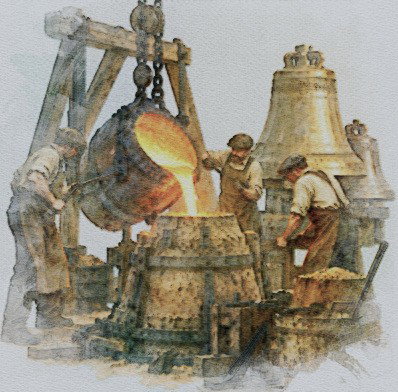
The popular image of old Wigan is dominated by coal mines, ironworks and smoking mill chimneys. These industries undoubtedly transformed the town during the nineteenth century, but Wigan’s industrial history began many centuries earlier.
Long before coal became king, Wigan was known for its metalworkers, potters, weavers and skilled craftsmen. Its industrial story stretches from medieval pewter workshops to the great engineering works of the Victorian age—and reveals a town whose products travelled across Britain and around the world.
Pewter: Wigan’s medieval industry
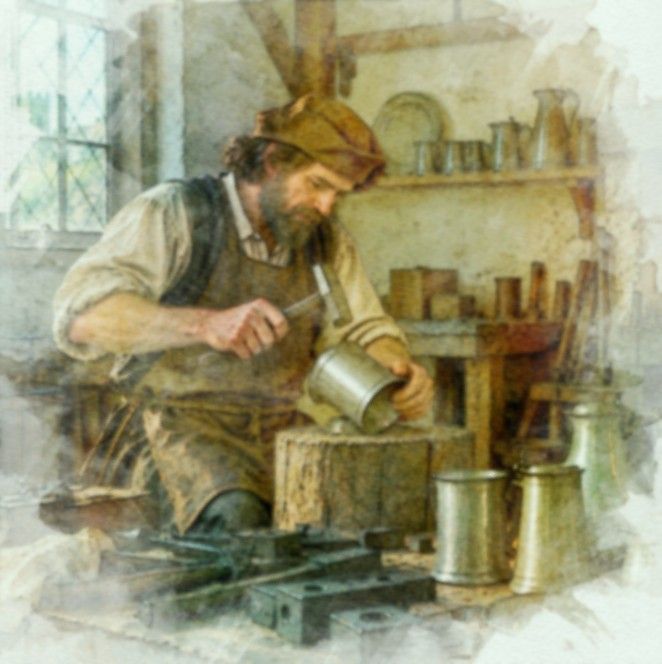
One of Wigan’s oldest organised industries was pewter making. By the fifteenth century, the town’s pewterers had formed their own company and were producing plates, dishes, drinking vessels and other household goods.
At a time when fragile earthenware could not easily be transported over Lancashire’s poor roads, pewter provided a practical and durable alternative. Wigan-made goods were sold by travelling chapmen throughout the surrounding countryside.
The trade reached its height during the seventeenth century. At one point, almost 100 master pewterers were working in the borough. Their products were distributed throughout northern England and even exported to America through Liverpool.
The Wigan pewterers took great pride in the quality of their work. In 1683, 79 local masters signed a petition asking the Crown for a Royal Charter. They wanted powers similar to those held by the London Pewterers’ Company, allowing them to inspect metal, enforce standards and prevent inferior goods from damaging Wigan’s reputation.
A curious connection with the national coinage followed in 1695. When Parliament ordered presses capable of striking coins to be surrendered to the Royal Mint, the only suitable presses handed over came from Wigan. They had belonged to Gerald Banks and his son and had previously been used for stamping pewter.
Braziers, bell-founders and cannon makers
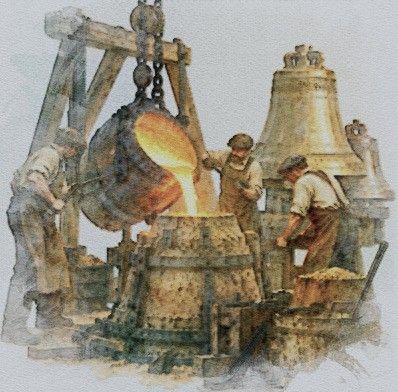
Closely associated with the pewterers were Wigan’s braziers. They worked principally in brass and were sometimes called panmakers or panners because brass pans were among their most familiar products.
Their skills extended far beyond household utensils. Wigan braziers produced apothecaries’ mortars, bells, guns, pewter moulds and objects made from gunmetal and bell metal. When necessary, they could even cast cannon.
Bell-founding developed in Wigan during the sixteenth century. Robert Orrell, a brazier recorded as a bell-founder in 1587, recast the great bell of Bodfari Church in Flintshire in 1592 and later made a bell for Holy Trinity Church in Chester.
Another important bell-founding family was the Scotts. During the Civil War, one member of the family manufactured cannon for the defence of Wigan. The business survived through several generations until the death of Alderman William Scott in 1713.
The Ashton family continued bell-founding in the town until 1767. Bells made by Wigan founders could once be found in churches across Lancashire, Cheshire and North Wales, demonstrating the wide reputation enjoyed by the town’s craftsmen.
Pottery and the beginnings of English porcelain
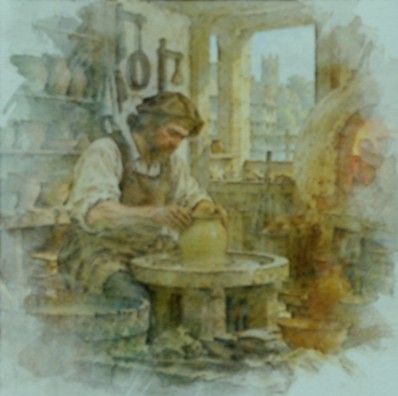
Pottery was another ancient Wigan trade. A document of 1310 mentions “Adam the potter of Wygan”, who possessed a house and half an acre of land near the Market Place.
During the seventeenth century, local potters were permitted to dig clay in Scholes and elsewhere around the town. Wigan’s most remarkable contribution to ceramics, however, came through John Dwight.
Dwight lived in Millgate between approximately 1663 and 1687 while serving successive Bishops of Chester, who were also Rectors of Wigan. He experimented with local clays before establishing the famous Fulham Pottery. Patents granted to him in 1671 and 1684 covered new forms of porcelain and stoneware, and he became one of the pioneers of English porcelain manufacture.
Dr Charles Leigh later recorded that Dwight’s early discoveries had been made using a whitish-yellow earth found near the cannel pits at Haigh.
Pottery continued in Wigan throughout the eighteenth century. The last important centre of production stood near the canal basin in Wallgate, a connection preserved in the name Pottery Road. It manufactured jugs, mugs and other everyday wares, but the local trade eventually succumbed to competition from Staffordshire. Canals and railways made it possible to bring cheaper mass-produced pottery into Wigan in ever-increasing quantities.
Wigan’s clocks and watches
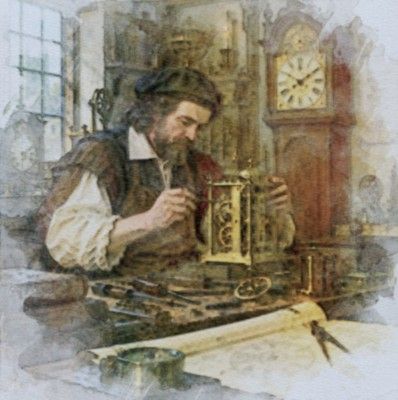
Clockmaking began to emerge in Wigan following the Restoration of Charles II. Roger Derbyshire, admitted as a freeman in 1662, is the earliest recorded local watchmaker.
He was followed by Peter Aspinall, a versatile craftsman who described himself as a spurrier but also made guns, steel crossbows and clock parts.
By the early eighteenth century, clockmaking had become an important local industry. Among the best-known makers were John Burges, Thomas Bridge, Henry Hindley and William Barker. Their longcase clocks became valued for both their mechanisms and their cabinets.
Between about 1650 and 1850, almost 100 clock and watchmakers are believed to have worked in Wigan. Their products have since found their way into collections in Britain and America.
The trade also supported other crafts. Wigan cabinetmakers produced finely made cases in Chippendale, Sheraton and distinctive Lancashire styles. Many clockmakers were also gunsmiths, illustrating how closely related the town’s specialist trades could be.
Weaving before the cotton mills
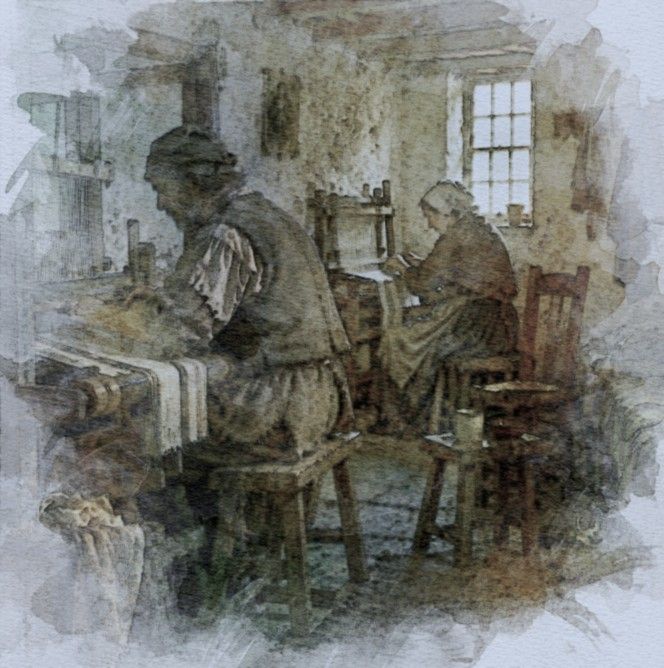
Weaving was established in Wigan long before the Industrial Revolution. Medieval documents contain frequent references to weavers, or “websters”, and the town possessed an organised Company of Weavers.
Early production concentrated on woollen cloth and linen. Cotton weaving appeared during the seventeenth century, using cotton imported from the eastern Mediterranean. Fustian—a strong fabric made from cotton, or from a mixture of cotton and linen—became an important Wigan product.
The town also manufactured coverlets, rugs, blankets, bed-ticking, linen checks and calico. Wigan even gave its name to a stiff, open fabric used to strengthen clothing and to a type of twilled sheeting.
Before the arrival of the factory, weaving was usually undertaken in workers’ homes. Some old Wigan houses had semi-basement workshops lit by low windows, while the family lived in the rooms above.
The Cloth Hall opened in 1784 and served as a centre for textile trading for about a century. The first cotton-carding machine is said to have been brought to Wigan around 1800, while the town’s earliest cotton mill stood in Princess Street. By 1818, eight mills were operating, principally around Wallgate.
Firms such as Eckersleys and Thomas Taylor & Brother later became major employers. Wigan-produced yarn and cloth were exported to India, China, the Balkans, Africa, Asia Minor and the Far East.
From hardship to clothing manufacture
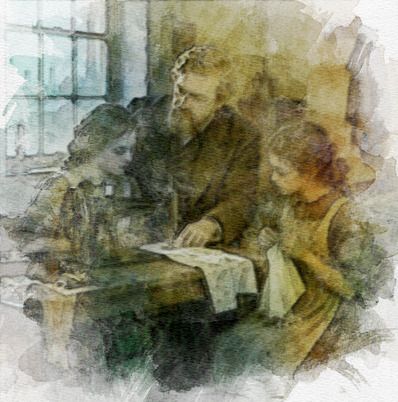
Wigan’s ready-made clothing industry grew from the distress caused by the Lancashire Cotton Famine of 1861–63. The American Civil War interrupted cotton supplies, leaving thousands of mill workers without employment. Because the coal industry depended heavily on trade from the cotton districts, miners and other workers also suffered.
Timothy Coop, a local tailor and member of the relief committee, was concerned about the large number of unemployed young women in the town. He bought sewing machines and arranged for them to make men’s clothing.
What began as an attempt to relieve hardship in the Wigan Public Hall , King Street, developed into Coop & Company, one of Wigan’s best-known manufacturers.
A purpose-built factory opened in 1872 and a women’s clothing department followed in 1879. The business eventually employed more than 2,000 people and produced civilian clothing as well as uniforms during both world wars.
Iron, steel and heavy engineering
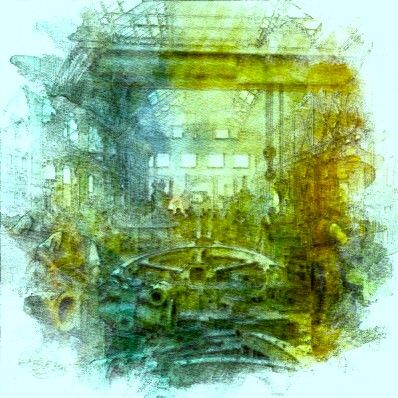
Coal encouraged the growth of iron production, foundries and engineering. Haigh Foundry, established in 1787, became one of the most important early works. It produced locomotives as well as machinery for the local mining industry.
During the nineteenth century, Wigan developed large ironworks, forges and rolling mills. These included the Wigan Coal and Iron Company, Pearson and Knowles, Worsley Mesnes Ironworks, Clarington Forge and Walker Brothers’ Pagefield Ironworks.
Walker Brothers became internationally renowned for mining machinery and powerful ventilation fans. In 1886, the company installed equipment in the Severn Tunnel. It later supplied ventilation for the Mersey Tunnel and produced machinery for mines as far away as South Africa and Chile.
William Wilkinson’s Holme House Foundry was associated with the design and construction of early steam tramway locomotives. Worsley Mesnes Ironworks specialised in winding machinery and safety equipment for mines, while William Park & Company produced enormous forgings, including ship shafts, rolling-mill components and colliery winding shafts.
Wigan engineering served industries throughout Britain and overseas. Local firms manufactured locomotives, cranes, mine winders, haulage engines, industrial valves, flameproof lighting, signalling systems and telephone equipment.
The close relationship between coal and engineering was fundamental. Wigan’s mines created a demand for pumps, winding engines, ventilation fans, cutting equipment and safety devices. Local engineers designed solutions to these problems and then sold their inventions to the wider world.
An industrial town of remarkable variety
Coal and cotton may have dominated Wigan’s Victorian skyline, but they formed only part of a much richer industrial inheritance. The town produced pewter plates, brass pans, church bells, cannon, pottery, watches, clocks, cabinets, textiles, clothing, locomotives, mine machinery, electrical equipment and some of the world’s most powerful ventilation fans.
These industries were connected. Clockmaking encouraged cabinetmaking; brass working led to bell-founding; coal supported iron and steel; mining created a market for engineering; and the cotton crisis helped establish a new clothing industry.
Wigan’s industrial history is therefore not simply a story of pits and mills. It is a history of skilled craftspeople, inventors, family businesses and workers who repeatedly adapted to changing markets and new technology.
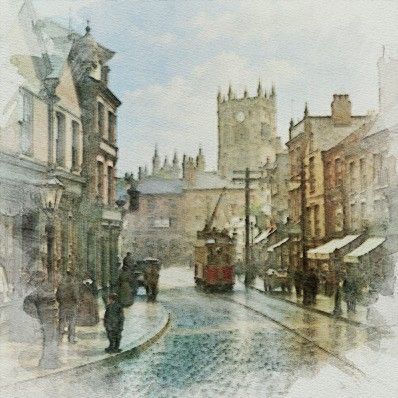
Although many of the workshops, mills, pits and foundries have disappeared, their influence remains embedded in Wigan’s streets, surviving industrial buildings and family histories. They remind us that the town’s prosperity was built not upon one industry, but upon centuries of ingenuity, enterprise and hard work.
Michael Nelson 2026
Source
This article has been produced primarily with reference to Wigan Council’s 1957 publication, The Voice of Industry, particularly the section entitled “Ancient Trades.”
The full publication is available for download below: